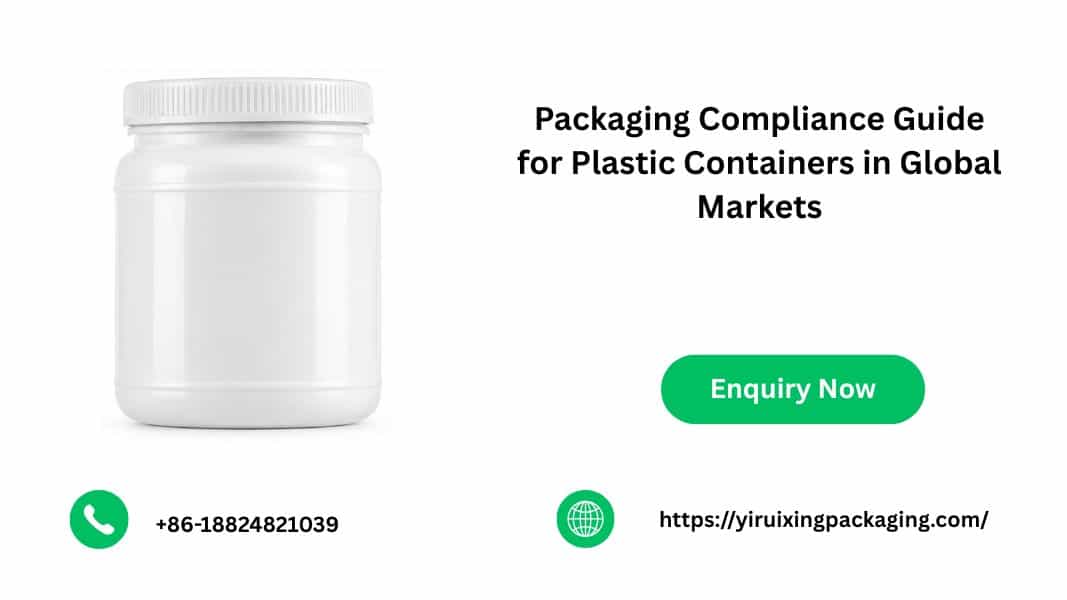
Packaging Compliance Guide for Plastic Containers in Global Markets – Entering global markets provides amazing opportunities for plastic containers manufacturers, but there are a number of packaging compliance rules they have to follow in order to succeed in such operations. The Packaging Compliance Guide for Plastic Containers in Global Markets will help companies to avoid all kinds of sanctions, customs complications, recalls, and negative publicity. As packaging rules vary among different countries, companies should follow the packaging compliance approach in terms of safety, labeling, sustainability, and material regulations. Global packaging regulations keep evolving, especially taking into consideration increased concerns regarding recyclability, food safety, and environmental issues.
Why Packaging Compliance Is Important
Packaging compliance means that plastic containers will meet all legal, environmental, and safety standards in the destination market. Regardless of whether your company manufactures food containers, cosmetic jars, pharmaceutical bottles, or industrial packaging, packaging non-compliance will lead to shipping rejection, financial losses, and damaged reputation.
Advantages of packaging compliance include:
- Rapid customs clearance
- Risk reduction of product recalls
- Enhanced customer trust
- Access to international markets
- Improved sustainability reputation
Packaging Compliance Key Areas for Plastic Containers
1. Material Safety Standards
Food, beverage, pharmaceutical, or cosmetic products packaged in plastic containers must be made with approved food-grade or application-specific materials. Approved materials are:
- PET (Polyethylene Terephthalate)
- HDPE (High-Density Polyethylene)
- PP (Polypropylene)
- LDPE (Low-Density Polyethylene)
In many countries, migration testing is required to make sure no harmful chemicals migrate from the packaging to the product. Regulatory requirements vary between different jurisdictions, so manufacturers must verify that their materials meet each target jurisdiction’s regulations.
2. Labeling Requirements
The labeling of packages must contain product information. In some countries, mandatory labeling includes:
- Information on the manufacturer
- Product identification
- Batch or lot number
- Recycling symbols
- Material identification codes
- Country of origin
- Safety warning
- Disposal information
Non-compliance with labeling requirements leads to delays in customs clearance.
3. Sustainability and Environmental Compliance
Regulatory requirements related to plastic packaging are being tightened in an effort to decrease waste and increase recycling efficiency. Firms need to show:
- Recycling design for packaging materials
- Reducing plastic consumption
- Using recycled content where needed
- EPR compliance
- Waste management reporting
Businesses adopting sustainable packaging from the start are likely to be well-prepared for future regulations.
Major Global Markets and Regulatory Requirements
Europe (EU)
The EU has some of the most advanced packaging laws worldwide. Companies selling their plastic containers into the EU need to be prepared to deal with the requirements of recyclability, labeling, use of recycled content, and EPR.
USA
Plastic packaging imported into the US needs to be compliant with relevant federal and state-level legislation. Documentation on material safety is needed for food contact packaging, while some states have developed packaging sustainability requirements.
Asia-Pacific
China, Japan, South Korea, and India all have their specific requirements regarding packaging and labeling. Exporters need to make sure that they comply with local material approvals, labeling requirements, and environmental regulations.
Middle East
Several Gulf nations are increasing their packaging regulations in order to enhance consumer safety and environmental performance. Importers must ensure that the packaging documentation and labeling comply with the local technical regulations prior to launching the products in the market.
Best Practices for Global Packaging Compliance
Companies can streamline compliance by following these best practices:
- Perform regulatory research prior to entering into new markets.
- Utilize internationally accredited testing labs.
- Keep technical documentation intact.
- Be up-to-date with changing packaging regulations.
- Work closely with experienced packaging manufacturers.
- Consider recyclability and sustainability while designing packaging.
- Control the quality of packaging during manufacturing.
- Keep the compliance certificates of your suppliers current.
Common Compliance Issues
Global manufacturers often experience:
- Constant changes in the regulatory framework
- Country-specific labeling regulations
- Varying standards for recycling packaging
- Shortfalls in material documentation
- Supply chain issues
- Rising sustainability expectations
Developing a structured compliance management system will help mitigate such risks and increase the efficiency of the process.
The Future Trends of Plastic Container Manufacturing Compliance
The future trends for the manufacturing of plastic containers include sustainability and circular economy projects. Businesses should expect the following:
- More use of recycled plastics
- Digital product passports and traceability systems
- Higher standards of recyclability
- Wider range of Extended Producer Responsibility (EPR) programs
- Growing consumer need for environmentally friendly packaging products
The companies that invest in compliance will be ready for tomorrow’s regulatory changes and will be able to create a competitive edge in international business.
Conclusion
Successful navigation through international packaging regulations means more than just following the law – it requires an approach based on quality, safety, sustainability, and compliance. By being aware of changing international standards and working together with professional packaging manufacturers, businesses will be able to minimize the risks, simplify global trade, and build their competitive advantages.
For professional plastic packaging solutions for international markets, Yiruixing Packaging is the right choice. The company is known for its innovative approach, quality production, and customer-oriented services.
FAQs
Why does packaging compliance matter for plastic packaging containers?
The importance of packaging compliance lies in the ability to fulfill the legal obligations, avoid issues with customs clearance, minimize the likelihood of recalls, and gain customer trust on the international level.
Which plastics are most frequently used for food packaging?
Materials such as PET, HDPE, PP, and LDPE are the most commonly accepted ones as long as they satisfy the relevant food packaging rules in the destination country.
What is EPR?
EPR is a system of regulation that places responsibility on the producers for handling the environmental aspects associated with their packaging products during their entire life cycle.
How frequently are global packaging regulations changed?
Global packaging regulations tend to change very often due to the emergence of new legislation regarding environmental, recycling, and consumer safety concerns.
How can manufacturers ensure compliance in several different countries?
Cooperation with professional packaging suppliers and keeping track of all the documentation can be considered some of the best ways of achieving compliance.