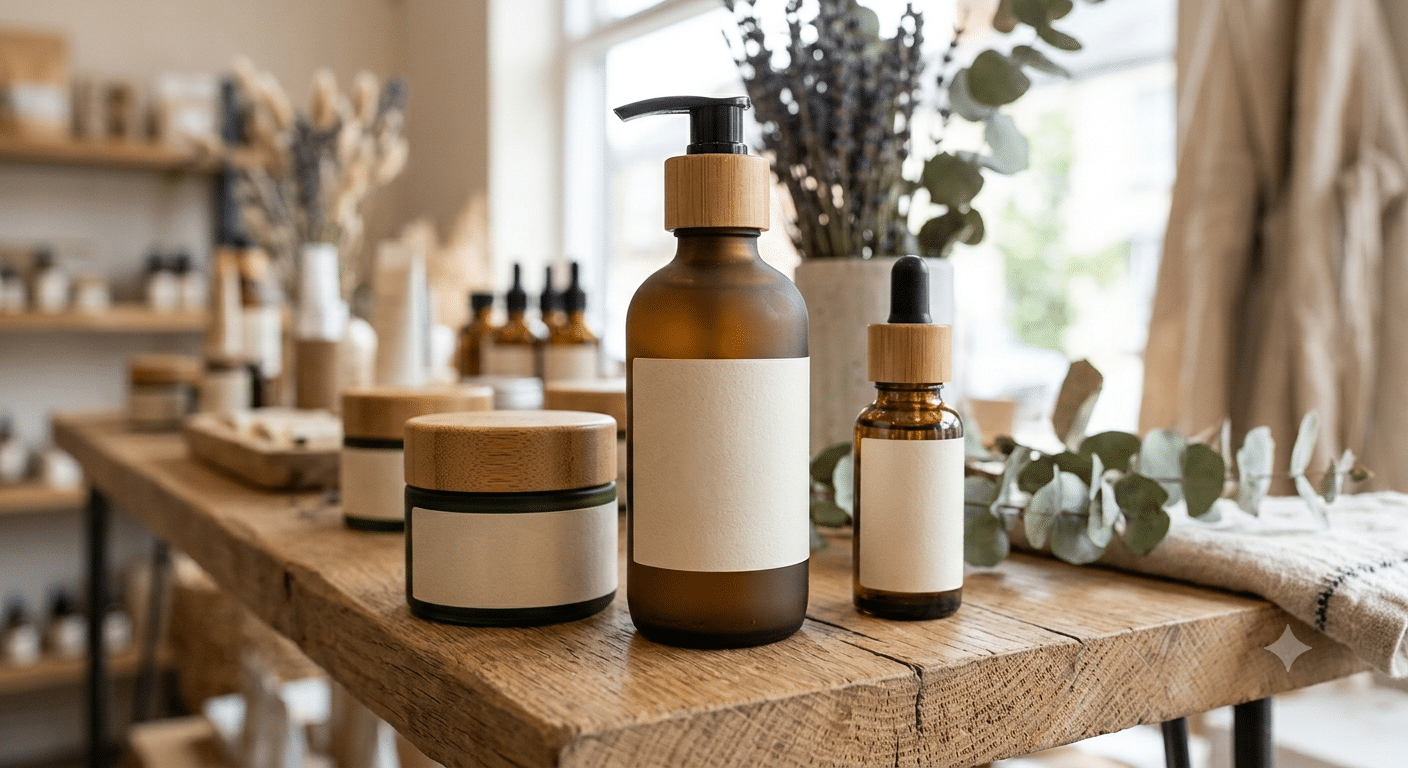
Exciting times when launching a new beauty brand! Understanding cosmetic packaging for small business , however, can be a little tricky. Don’t worry, though; knowing a few things before placing your first order can save you money and protect your formula while also helping your brand stand out to customers. However, if you don’t know much about cosmetic packaging for small businesses, then you could end up with leaky bottles and boxes that you can’t sell.
Let’s go through some easy steps to make sure you can place your order with ease.
Why Your First Packaging Order Matters
Customers will make an instant judgment based on your packaging and product. Good cosmetic packaging for a small business will be the first thing your customers will see and will play an important role in protecting your formula, telling the story of your brand, and surviving in transit. Small brands will also have less room for error. If you get a bad batch, it will affect you more, as your budget will be tighter.
Step 1: Know your product.
Before looking at any packaging designs, think about the answers to a few questions!
- What is the type of product you are selling? Is it Cream, serum, gel, powder, or liquid?
- What is the consistency? If you are selling a thick cream, then a jar could be best. Thin serums would work better with droppers/pumps.
- Is your formula sensitive to light/air?
- How much will you be putting in each package?
The packaging will depend on your formula. Sharing this information with your supplier at the beginning will mean a good supplier will point out any incompatibility issues.
Step 2: Choose your material.
All packaging materials have their own benefits. Below is a brief overview:
- PET plastic—it is clear, lightweight, and cheap. Suitable for toners, lotions, and shampoos.
- HDPE/PP – Durable and resistant to chemicals. Great for creams, tubes, and jars.
- Glass—A luxury option; however, it can be heavy and expensive to transport.
- Airless pumps help keep sensitive formulas fresh for longer.
Plastic is a great choice for most cosmetic packaging for small businesses and small-budget packaging. It’s lightweight, durable, and easy to customize. You can work with a custom plastic container manufacturer to match your brand with different shapes, colors, and finishes, with minimal minimums. You can browse ready options like plastic bottles for toners and lotions, and plastic jars for creams and balms.
3. Set a realistic budget.
There are a number of costs to consider. These will include:
- Cost per piece.
- Tooling/mould fee (if you want your packaging to be a specific shape).
- Printing/labelling/decorating.
- Sample costs.
- Delivery and import duty.
- Add an extra 5-10% for any issues with faulty items or delays.
Many people will only look at the cost per piece when placing their first order. It is better to ask for a full breakdown of as many quotes as possible; those cheap quotes might have hidden costs
4. MOQ.
MOQ stands for minimum order quantity. Often this is the largest issue for small brands.
A few things to try to handle it:
- Using existing designs and just changing the color/print.
- Ask your supplier if they can do a lower MOQ for your trial order.
- Reduce the number of SKUs. Start off with 2-3 products.
- Be honest with your supplier. Many are happy to help you build your brand by offering a lower MOQ.
5. Regulations and labeling.
Most markets will have some sort of regulation on cosmetics. Before you finalize your cosmetic packaging for a small business, find out what applies in your target market. This could be related to ingredients, batch numbers, and net quantity.
You can check these official resources to learn more:
Your packaging should be food/skin safe. Ask your supplier for test reports on the materials they use.
6. Always order samples.
This is an essential step! By ordering samples, you can check:
- It has a tight seal.
- No reaction between your formula and packaging.
- A pump/dropper is how you want it.
- The color is how you want it.
Fill up your samples with your product and leave them for a week. Shake them and even do a drop test. It will save you a lot of money if you find any issues. Test your outer packaging too. A cosmetic packaging box with foam insert is a good example of what keeps fragile jars safe in transit.
7. Find a good supplier.
Packaging can be found on marketplaces or directly from factories. Popular sources include Alibaba, Made-in-China, and Global Sources. If you want to find US-based suppliers, then ThomasNet is a great directory.
When comparing suppliers, look for:
- Good communication and quick responses.
- Real pictures of their factory and certifications.
- Happy to send samples.
- Quality checks.
- Experience with cosmetics.
A reputable custom plastic container manufacturer will talk you through the best materials, tooling, and timeframes for your brand.
8. Timeframe.
Most people don’t realize how long packaging can take to order. Typically, you can expect:
- 1-2 weeks for samples.
- 1 week for approval and artwork.
- 3-5 weeks for production.
- 1-6 weeks for delivery, depending on how you want it delivered.
Start the preparation process at least 3 months ahead of launch. There will always be setbacks, which means it is good to have some time in hand to make sure everything runs smoothly.
Some Things To Avoid
- Don’t order packaging before trying out your formula.
- Don’t skip samples.
- Don’t forget about the weight and size of the packaging when shipping.
- Don’t order too many designs.
- Don’t forget about labelling.
By avoiding these, your cosmetic packaging for small business will work harder for your brand from day one.
Get Started on Planning Your First Order!
At Yiruixing Packaging, we help growing brands bring their ideas to life with beautiful and functional cosmetic packaging for small business. Benefiting from our expertise as a custom plastic container manufacturer, we can offer you a variety of options to fit your small brand. Chat to our team today to discuss your project and get a quote. Or email us at info@yiruixingpackaging.com.
FAQs
- What is the best material for cosmetic packaging for small business?
PET, PP, and HDPE plastics are popular choices. They’re cheap, lightweight, and durable. However, it depends on your formula and brand style.
- How much should I budget for my first packaging order as a small business?
It depends, but you’ll need to include costs for cost per piece, tooling, printing, and delivery and add 5-10%. Always ask for a full quote.
- Can I order small quantities as a small brand?
Yes! Many suppliers will provide a lower MOQ for existing designs. Ask if they can provide trial orders.
- How long does it take to make cosmetic packaging for small business packaging?
Cosmetic packaging for small business can take between 2 and 3 months to make, so it’s best to get started early.
- Should I order samples for cosmetic packaging for small business?
Yes, this will help avoid any costly errors.
- How do I know the custom plastic container manufacturer is reputable?
Look for certifications, request samples, and check that they have good communication channels and quality checks.