Knowledge of how to Protect Solar Inverters During Long-Distance Transportation may ensure that your solar inverters get transported without damage, possible warranty claims, and angry installers. Inverters tend to be heavy items filled with highly sophisticated electronics. Inverters are commonly shipped hundreds, even thousands, of kilometers by road, rail, and sea transport. A simple shock may cause cracks in a heat sink or simply cause a component inside the unit to come apart. But here is good news for you—heavy-duty corrugated packaging offers reliable ways to protect solar inverters during long-distance transportation. Here is how.
Why it is difficult to protect solar inverters during long-distance transportation
There are many reasons why solar inverters may become damaged during transit:
- Weight. Heavy loads add pressure to carton edges and walls.
- Fragile components. Solar inverters include fragile displays, connectors, cooling fins, and circuit boards.
- Vibrations. Long transports lead to many hours of constant shaking.
- Water. Moisture, humidity, and sea climate may affect electronics.
- Stacking loads. Boxes in containers or warehouses hold a load of boxes above them.
Why Use Heavy-Duty Corrugated Packaging?
Heavy-duty corrugated packaging provides great protection at a relatively low price. Its fluted design provides shock absorption and crush resistance. This material is lightweight, so the freight charges will not be high. It can be cut to any size, marked for proper handling, and recycled. For most of the brands, it is the best solution to protect solar inverters during long distances without overpaying for wooden cases.
Select the Correct Board Grade
Not all corrugated boxes are suitable for packing an inverter. Bear in mind the following tips:
- Use heavier boxes for heavy inverters. 7-ply corrugated boxes provide additional compression strength for heavy inverters and long ocean transportation.
- Look at the strength of the box. Request a burst strength and edge crush test (ECT) from your supplier. The Fiber Box Association will help you understand these ratings.
- Water-resistant materials – useful if storing in a humid port.
Inner Protection
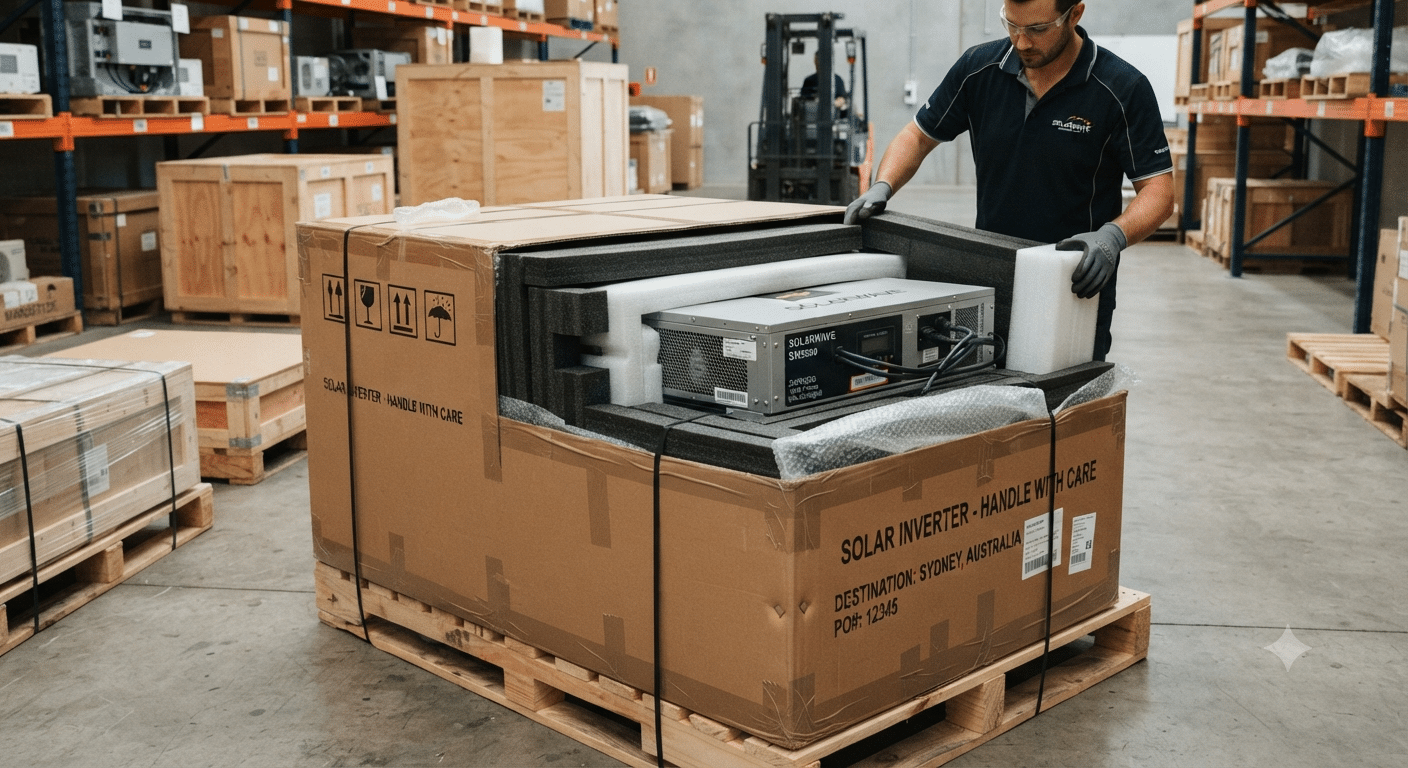
The outer box is important, but equally important is the inner box. To help protect your inverter, you can include:
- Custom corrugated inserts – Custom-cut inserts to hold your inverter in place.
- Corner Protectors – Foam or board corner protectors to help protect the fragile areas.
- Anti-static bags – To help protect electronic components.
- Desiccant Packets – Packets that soak up any moisture inside the sealed box.
- Fill voids – Voids cause movement. So ensure you fill all gaps.
The tighter the fit, the less your inverter will move. Less movement means less damage from the vibrations. This is the key to a successful solar inverter packaging solution.
Box Sizing
Small details are important:
- Custom sizing – Custom-sized shipping boxes made for your exact inverter model, not generic sizes.
- Strong corners and seams – Double-wall and strong glue to stop boxes from opening.
- Correct Labelling – Print “Fragile,” “This Side Up,” & “Keep Dry” on wholesale custom printed boxes so handlers know what to do.
- Palletising – Secure boxes using straps and wrap with stretch wrap. If you’re exporting, then use ISPM 15 compliant pallets.
Testing
Always make sure your packaging is robust. Drop, vibration, and compression tests can be carried out. These tests replicate real transportation conditions based on procedures published by the International Safe Transit Association (ISTA). Our guide ‘Testing Your Packaging Prior to Mass Production’ can show you what tests should be carried out by customers. Performing tests is the best way of making sure you can protect solar inverters during long-distance transportation.
5-Minute Checklist
- The board is suitable for the inverter weight.
- Custom insert to protect the product.
- Moisture-proof.
- Boxes are packed and tied.
- Correct labelling with handling symbols.
- Drop and vibration testing.
Choosing the Right Packaging Partner
To ensure high-quality packaging, you need to choose the right manufacturer. Choosing a reliable corrugated box supplier from China will mean you have samples, testing, and good communication. You can also choose eco-friendly options. For more information, visit the FEFCO website.
Quality Boxes for Solar Inverters
Yiruixing Packaging can provide you with custom 7-ply corrugated boxes and packaging solutions. We have 14 years of experience in the industry, so you can be assured that we will protect solar inverters during long-distance transportation, as they will be looked after whilst being transported from the factory to the installation. We can provide worldwide shipping and free quotations.
Contact us via phone or email at info@yiruixingpackaging.com to find out more about your order.
FAQ
- What board should I use for my heavy solar inverters?
Double-wall or 7-ply corrugated boards would be best, as they will be crush- and stack-proof.
- Should I use custom inserts?
Yes. Custom inserts will stop movement, which is one of the main causes of damaged goods.
- How do I prevent moisture damage when transporting by sea?
Use moisture-proof boards, anti-static bags, desiccants, and correct packaging.
- Can I use corrugated boxes instead of wooden crates?
Yes. Depending on the inverter, you can use corrugated boxes. Corrugated boxes with strong pallets will be more cost-effective and lighter. Heavier or expensive items may require extra protection.
- Can I get custom printing?
Yes. We can print your logo, product description, and handling symbols on all boxes.