
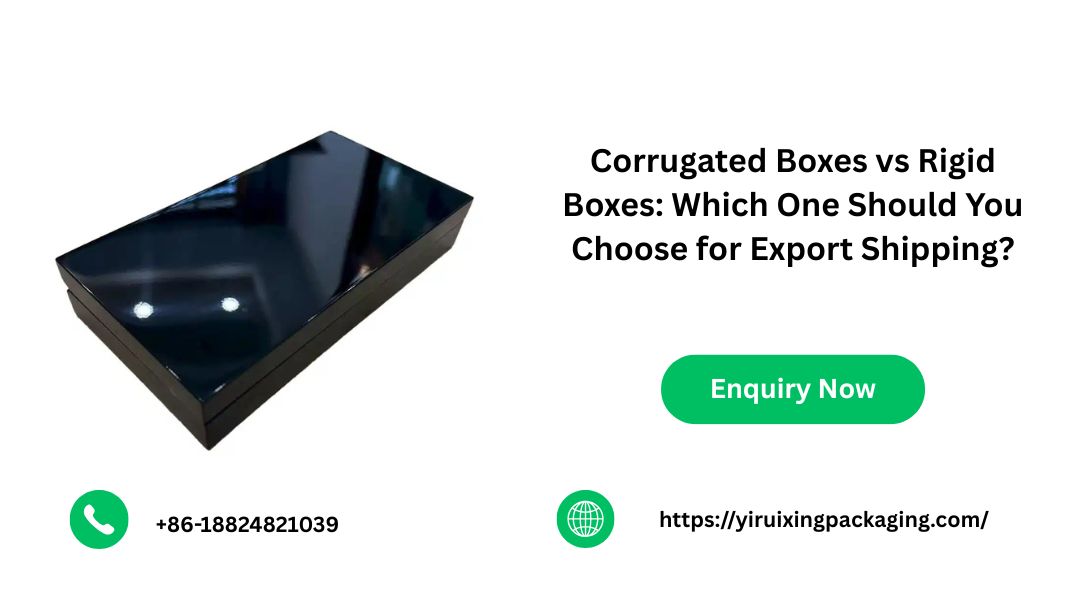
Corrugated Boxes vs Rigid Boxes: Which One Should You Choose for Export Shipping? – The packaging you choose for your product is an important factor when you think of global logistics, as it affects the safety of the product, the cost of shipment, and the way people see your brand. The debate on Corrugated Boxes vs Rigid Boxes: Which One Should You Choose for Export Shipping? is a critical question for exporters seeking the perfect balance between strength, cost efficiency, and appearance. Besides that, cross-border e-commerce is growing, and the requirements for shipping have become stricter; therefore, companies have to closely evaluate their packaging materials. Corrugated boxes are the main choice for large-scale shipping, whereas rigid boxes are the ones elevating the premium packaging needs.
Knowing their differences is the first step to reducing damage, improving logistics efficiency, and enhancing customer satisfaction.
Definition of Corrugated Boxes
Corrugated boxes are made from corrugated fiberboard, consisting of a fluted inner layer between two liners. This structure provides strength and protection while remaining lightweight.
Major advantages:
- Simple and sturdy
- Available in single, double, or triple-wall constructions
- Very good at absorbing shocks
- Low-priced and environmentally friendly
Typical applications:
- Shipping and logistics for export
- E-commerce packaging
- Bulk transportation of goods
Definition of Rigid Boxes
Rigid boxes, also known as set-up boxes, are made using thick paperboard or chipboard that can keep the shape of the box permanently. They are the preferred packaging for luxury items.
Major advantages:
- Gives a fancy look and feel
- Very strong
- Non-collapsible
- Great for the point of sale and promotion of a brand
Common applications:
- Luxury products (electronics, jewelry, cosmetics)
- Gift packaging
- High-end retail items
Major Differences Between Corrugated and Rigid Boxes
| Feature | Corrugated Boxes | Rigid Boxes |
| Material | Fluted cardboard layers | Thick chipboard/paperboard |
| Cost | Low to moderate | High (3x-5x more expensive) |
| Weight | Lightweight | Heavier |
| Durability | Shock-absorbing | Crush-resistant |
| Storage | Foldable | Non-collapsible |
| Use Case | Shipping & logistics | Luxury packaging |
Which One Should Be Used for Export Shipping?
1. Cost Efficiency
The cost of corrugated boxes is much lower, so they are perfect for large-scale export. Rigid boxes can cost 3-5 times more, which will increase overall logistics expenses.
2. Shipping Performance
Corrugated boxes are very suitable for export shipping because they:
- Absorb shocks during transportation
- Are stackable and space-efficient
- Help in reducing dimensional weight costs
Rigid boxes, although quite strong, are heavier and larger, which increases shipping costs.
3. Product Protection
Corrugated boxes: Best for long-distance shipping with multiple handling points
Rigid boxes: Better for protecting delicate, high-value items in controlled environments
4. Branding and Presentation
When it comes to branding, rigid boxes perform better:
- Premium finishes (foil stamping, embossing)
- Offer a more engaging unboxing experience
Nevertheless, corrugated boxes also allow printing and branding for the e-commerce market.
Industry Trends and Statistics
- Corrugated packaging makes up more than 54% of the packaging market for sectors such as automotive shipping.
- The world market for corrugated boxes continues to expand due to the growth of e-commerce and the increasing demand in logistics.
- In terms of sustainability, corrugated boxes are increasingly preferred as they are highly recyclable and primarily made of renewable resources.
- Among the exporters, corrugated packaging is a favorite for its combination of strength, affordability, and sustainability.
When Should You Pick Corrugated Boxes?
Choose corrugated boxes if:
- You are shipping goods internationally
- You require cheap packaging in large quantities
- Products need shock resistance
- Sustainability is a priority
What Are They Most Suitable For: Export shipment, logistics, and online sales
When Should You Go For Rigid Boxes?
Choose rigid boxes if:
- You offer premium products
- Marketing and the look of the package matter most
- The product is highly fragile and needs strong protection
What Are They Most Suitable For: High-end retail and presentation packaging
Conclusion
In the majority of export shipping situations, corrugated boxes are the best option thanks to their low price, versatility, and ability to withstand long-distance transportation. Rigid boxes should be reserved for premium products when presentation gives value.
If you want both reliable and flexible packaging solutions, then Yiruixing Packaging is a reliable option. They provide excellent products with tailor-made features for export packaging. Their extensive experience helps businesses make informed decisions about durability, cost, and branding.
FAQs
Are corrugated boxes strong enough for export shipping?
Yes, corrugated boxes have been developed with fluted layers that offer both cushioning and strength, making them ideal for long-distance shipping.
Why are rigid boxes more expensive?
Due to the use of thick materials and complicated manufacturing processes, the production costs of rigid boxes can grow up to three to five times.
Which type of packaging is more environmentally friendly?
Corrugated boxes are the better option as they are recyclable and made from renewable resources.
Is it possible to use rigid boxes for shipping?
Yes, however, they are not the most suitable choice for bulk export owing to their weight, expense, and non-collapsible features.
Which sectors are the biggest users of corrugated boxes?
Sectors such as e-commerce, food & beverage, electronics, and logistics are the major consumers of corrugated packaging.