Over the past year, one word has dominated our reading when it comes to packaging news – ‘compliance.’ The US, UK and EU have begun cracking down on the products we ship, pack and dispose of, leaving companies scrambling to adjust. More than simply trying to escape financial penalties, consumers want sustainability as a practice.
Regulation isn’t behind this trend, however – demand from your customers is. Fortunately, changing to sustainable packaging is more than a legal requirement, it’s one of the most intelligent business opportunities currently available to any brand and we’re simplifying that jump with sustainable packaging solutions for businesses.
So here in this blog, we give you proper information about how eco-friendly packaging helps brands meet USA, UK and EU sustainability regulations. Stay tuned for this blog.
Why Sustainability Regulations Are Getting Stricter Worldwide
Nothing symbolizes environmental damage more starkly than the heaps of packaging and plastic bottles on the world’s streets. Thus, it comes as little surprise that regulators are tightening their reins. Landfills are at maximum capacity, the ocean’s capacity to cope is overwhelmed and the public’s concern is reaching a boiling point. With all this, leading markets are coming out with new regulations that focus on outlawing single use plastics, setting required recycled content, and developing programs such as extended producer responsibility (EPR) programs that assign fiscal liability to companies’ brands to manage their products throughout the globe.
What The USA Requires From Brands Today
Regulation differs from state to state rather than at a federal level in the US. Some states (such as California, Oregon, Colorado, and Maine) have implemented EPR legislation, mandating that companies finance recycling of materials generated from their packaging. Additional states have banned or restricted polystyrene foam and a list of other single-use plastic packaging. Because packaging is handled individually for each state – and because missing requirements in just one market could result in fees or loss of sales channels for brands that market themselves in multiple states – a packaging strategy that satisfies the most demanding rules is necessary for national brands.
How The UK’s Packaging Rules Are Reshaping Compliance
However, not to miss a boat the United Kingdom have also introduced their own Extended Producer Responsibility scheme, passing the financial burden of the collection and recycling of packaging onto those who supply it to their consumers and additionally there is the plastic packaging tax, where businesses pay if their packaging uses less than 30% recycled plastic and between the two, it influences brand owners toward lightweight, increased recycled materials and packaging that is truly and scalably easier to be recycled.
Understanding The EU’s Packaging and Packaging Waste Regulation
Most impactful has to be the European Union’s PPWR, packaging regulations mandating every member country meets specific recycling, recycled content, and waste-reduction targets. The PPWR puts limits on redundant packaging and encourages a move towards reusability and refills when viable. A non-negotiable for any brand targeting Europe.
Why Eco-Friendly Packaging Makes Compliance Simple
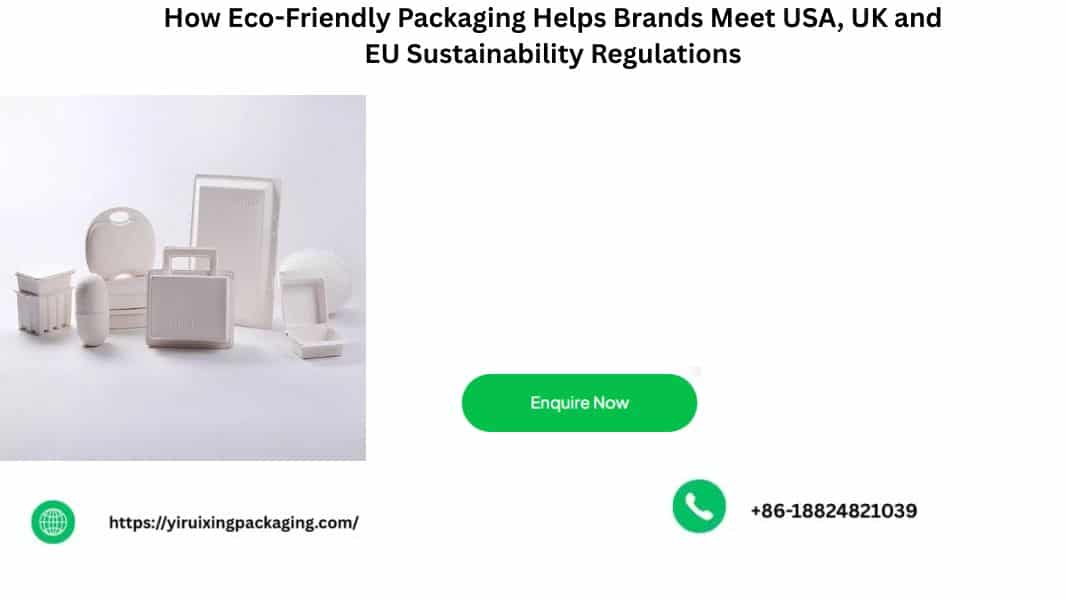
And Here’s the part we bet sounds like a breath of fresh air: Eco-packaging tackles nearly all these regulatory hurdles at one stroke. Eco-friendly packaging solutions inherently address the unique regulations around EPR, mandatory recycled content and plastics restrictions for all three territories simultaneously. For brands selling into the EU, the UK, and the United States, a unified green packaging design or, more likely, portfolio, will go a long way to ensure compliance with disparate requirements, keeping operational costs and the burden on logistics down.
The Business Benefits That Go Beyond Regulatory Compliance
While adhering to ethical standards keeps us safe, eco-packaging develops trustworthy brands that are not fakers! Products that reduce a business’s footprint, we are seeing buyers prefer these over others; this also goes into the retail market that wishes for more trust over purchasing decisions, especially knowing who provides our supplies and where they truly contribute! Eco-packaging can save cash long term on raw products, ship much light then traditional cardboard and prepare the world of packaging long ahead of regulations.
Choosing The Right Packaging Partner For Long-Term Compliance
Most Brands Couldn’t navigate 3 unique regulatory systems Alone. Fortunately for those, that is what you can do with a professional packaging partner! Yiruixing Packaging helps brands create eco-friendlypackagingdesigned specifically with USA, UK, and EU regulations at the forefront. Instead of scrambling to satisfy sustainability at the final moment, a partnership will enable businesses to stay ahead of evolving laws – without compromising their sustainable credentials.
Frequently Asked Questions
Why is my favourite brand suddenly changing its packaging?
The chances are that you’re more than just a new look. Many of the major producers are finding themselves obliged to reduce their use of virgin plastics as new legislation in both the USA, UK and EU stipulates less virgin materials in packaging and/or increased use of post-consumer recycled content or even packaging that is more readily recycled.
Does eco-friendly packaging actually cost brands more money?
Sometimes the hit is hard, especially at the start of a switch, but it often pays out, because you save your brand from those pesky governmental fines, you ship lighter materials thus cutting shipping freight, plus you lure those ethical shoppers the competition misses the boat to all of them. In many cases it ends up saving you more time and money at the end of it.
If I buy a product with “recyclable” packaging, does that guarantee it’ll actually get recycled?
Automatically, no – your local services could still tell you off, but taxes in place like the UK’s Plastic Packaging Tax (PPPT) and the EU’s PPWR are helping create that gap between what the world wants for recyclability and the practicality.
Why do rules seem so different between the USA, UK, and EU?
Ooh, good question – it catches many off guard. The USA makes the rules at the State level (therefore making very broad interpretations), the UK implements its own EPR and taxes plastic goods through it own national legislative framework, whereas the EU has implemented one unified piece of legislation at the European level (PPWR). This leads to brands selling in the international market having to operate across three separate, independently run legal frameworks.
Is this just a trend, or is packaging regulation here to stay?
These policies aren’t going away. This is the new regulatory normal that is codified into law in every single one of the cities with penalties that also include the likely expectation that these policies will continue to grow over time.