
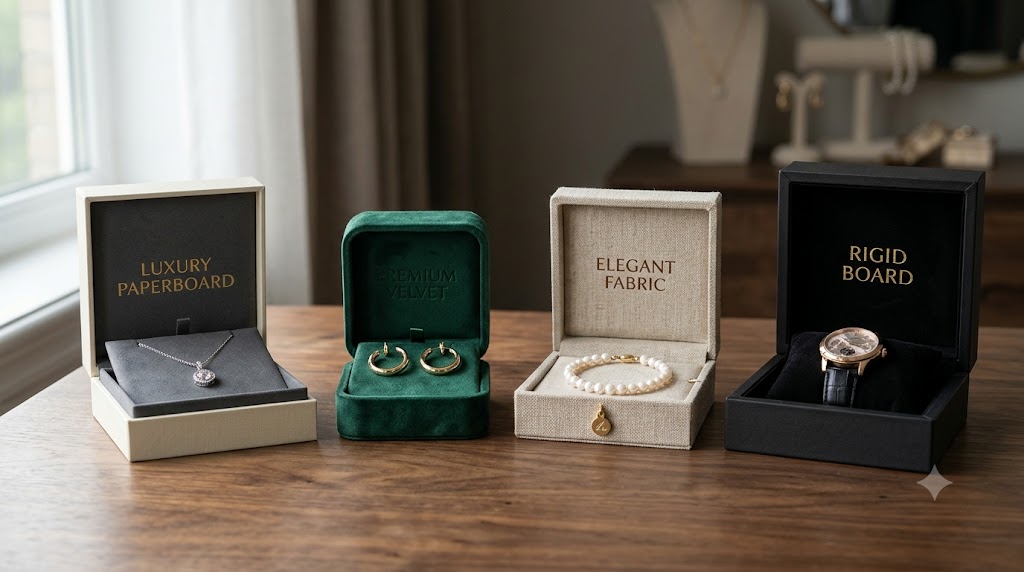
Let us face it, the first impression about your collection starts from the box, before your customers even take a look at your ring, necklace, or earrings. The moment of opening the box, feeling the surface, and the first sight of the content represents part of the total impression, whether it was planned or not. There are plenty of materials available to help you make a choice! While paperboard, velour, cloth and rigid board deliver a luxurious feel, each has different nuances in terms of cost, durability and design. Whether you are launching a new collection or making over the existing packaging that does not match your current prices, you will be able to understand different options.
Here in this blog, we give you proper information about luxury jewelry packaging materials compared: Paperboard, velvet, fabric, and rigid board.
Paperboard Jewelry Boxes: Lightweight, Affordable and Surprisingly Versatile
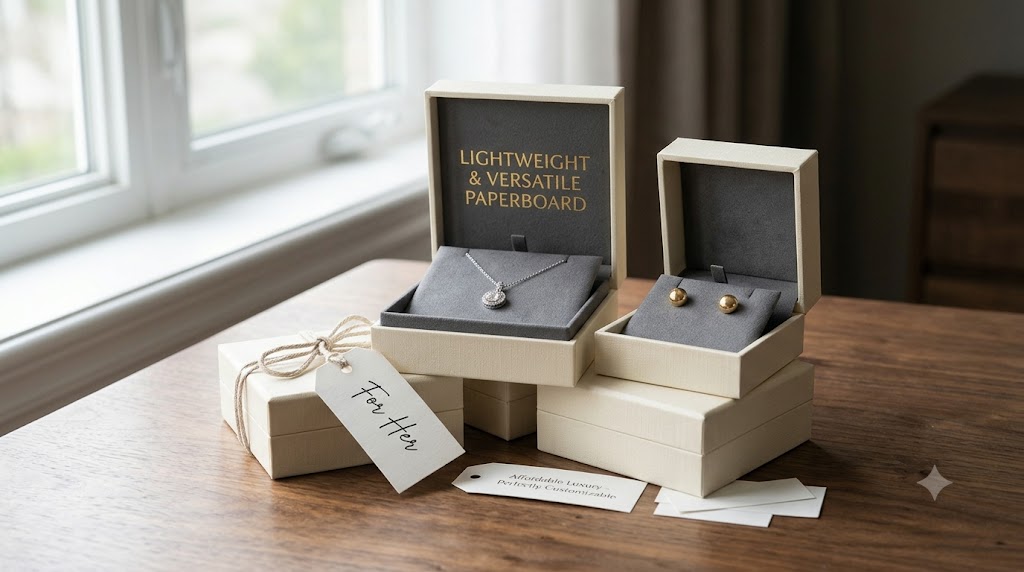
Paperboard, or folding cartons, is the point of entry for many jewelry brands (and for good reason). It’s great for high-quality decoration and printing, shipping costs are attractive, and paperboard boxes can be decorated and finished with foil, embossed details, and a soft-touch laminate to create an extremely impressive presentation that belies its cost. The trade-off is that paperboard lacks thickness and durability, so this option is more appropriate for pieces of modest price, counter displays, retail sleeves, and outer cartons as opposed to heirloom presentation. There’s no shortage of recycled and FSC-certified options here too if your customers care about sustainability.
Velvet Jewelry Packaging: Soft Texture That Signals Heirloom Quality
Don’t go chasing waterfalls. Stick with velvet: the classic material for retaining the glamour of your jewelry purchase since touch is important. Its dense pile cushions gems, shields polished metal from scratches, and immediately conveys value. You’ll see velvet used on a wrapped exterior, as an interior lining or fitted insert, and jewelers often prefer deeper shades such as navy, black, burgundy or emerald green. The hard part is caring for it: velvet attracts dust and lint, suffers from visible pressure marks, and costs more than paper. But for a diamond engagement ring or fine jewelry, many brands believe it’s worth it.
Fabric-Wrapped Boxes: Silk, Linen and Cotton for a Refined Look
Fabric envelopment allows for more options than is possible with velvet alone. Silk provides a smooth and shiny finish, linen provides an attractive rustic texture, and cotton blends offer a good choice for environmentally conscious or minimalist brands. Fabrics lend themselves well to embroidery, textile labels, and subtle embossed patterns. Laying a piece of fabric over a solid base ensures that the fabric gives the product a nice appearance and good protection. Keep in mind, though, that light-colored materials may be stained or frayed.
Rigid Board Construction: The Backbone of Luxury Rigid Box Packaging
Rigid boards aren’t just a material but rather a structural element. Composed of thick and hard grayboard and covered with paper, velvet, or fabric to become a box that can maintain its shape for a long time. It is the basis for a luxury rigid box packaging increase in use in industries such as jewelry, watches, and gift sets. Rigid boxes are durable and consumers value them because of their weight. Rigid boxes are more costly and bulky in transportation than folding cartons; however, they allow the creation of perceived high costs, thanks to the elegance achieved by magnetic locks and ribbon pulls.
How to Choose the Right Material for Your Brand and Budget
To summarize:
- Paperboard is used for cost-effective packing of mass products
- Velvet is used for beautiful fine jewelry and engagement item packing
- Fabric is used for brands that want a unique sense of touch.
- Rigid board is used for high-end products and gift sets.
However, in reality, the most effective packaging solutions tend to rely on the combination of two or more materials – stiff cardboard laminated with cloth and with the soft velvet inlay. Depending on your price category, as well as the expectations of your customers and the shipping conditions, you should choose the right packaging materials. It is always helpful to deal with a luxury jewelry box packaging manufacturer, as they can give some advice regarding the materials used for box creation, the finishing, and the minimum quantity that you have to order.
Final Thoughts: Building Packaging That Matches the Value of Your Jewelry
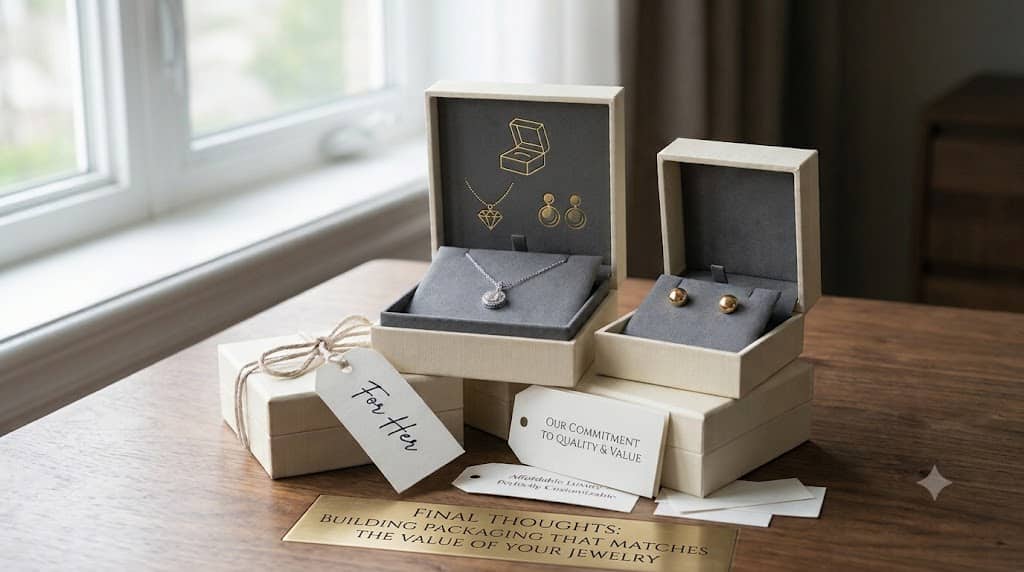
All the resources used in this context are essential. The use of paperboard allows for maintaining affordable pricing, velvet gives the products softness, textile offers uniqueness, and rigidity provides durability. The best mix depends on the branding of the company and the customer’s experience. For companies that wish to make their ideas come true, Yiruixing Packaging is a trusted luxury customized jewelry box packaging supplier.
FAQs
Which material is best for a small jewelry brand just starting out?
Paperboard is likely the best place to start. It’s inexpensive, easy to personalize with your logo, and light enough to keep shipping costs down. Once you start selling well, you can change your best sellers into rigid boxes while keeping your existing look.
Is velvet packaging worth the extra cost?
If you offer high-end jewelry, engagement rings, or presents, it may well be the case. Velvet supplies a smooth and luxurious feel that consumers feel as soon as they open the packaging. Using a velvet lining in a more affordable box can evoke the desired feelings with lower costs for novice brands.
What’s the difference between a rigid box and a regular folding box?
A folding box is constructed using a lighter paperboard and is shipped flat while a rigid box uses a thicker paperboard that is wrapped by hand. Because rigid boxes are sturdier, provide more structurally sound protection, and have a better overall look than their counterparts, they are most often used in more luxurious items.
Can I mix different materials in one jewelry box?
Definitely and numerous high-end brands use it. One of those typical combinations is formed by a rigid board frame covered in fabric paper and a foam or velvet insert inside. The combination provides you with durability, elegance and safety.