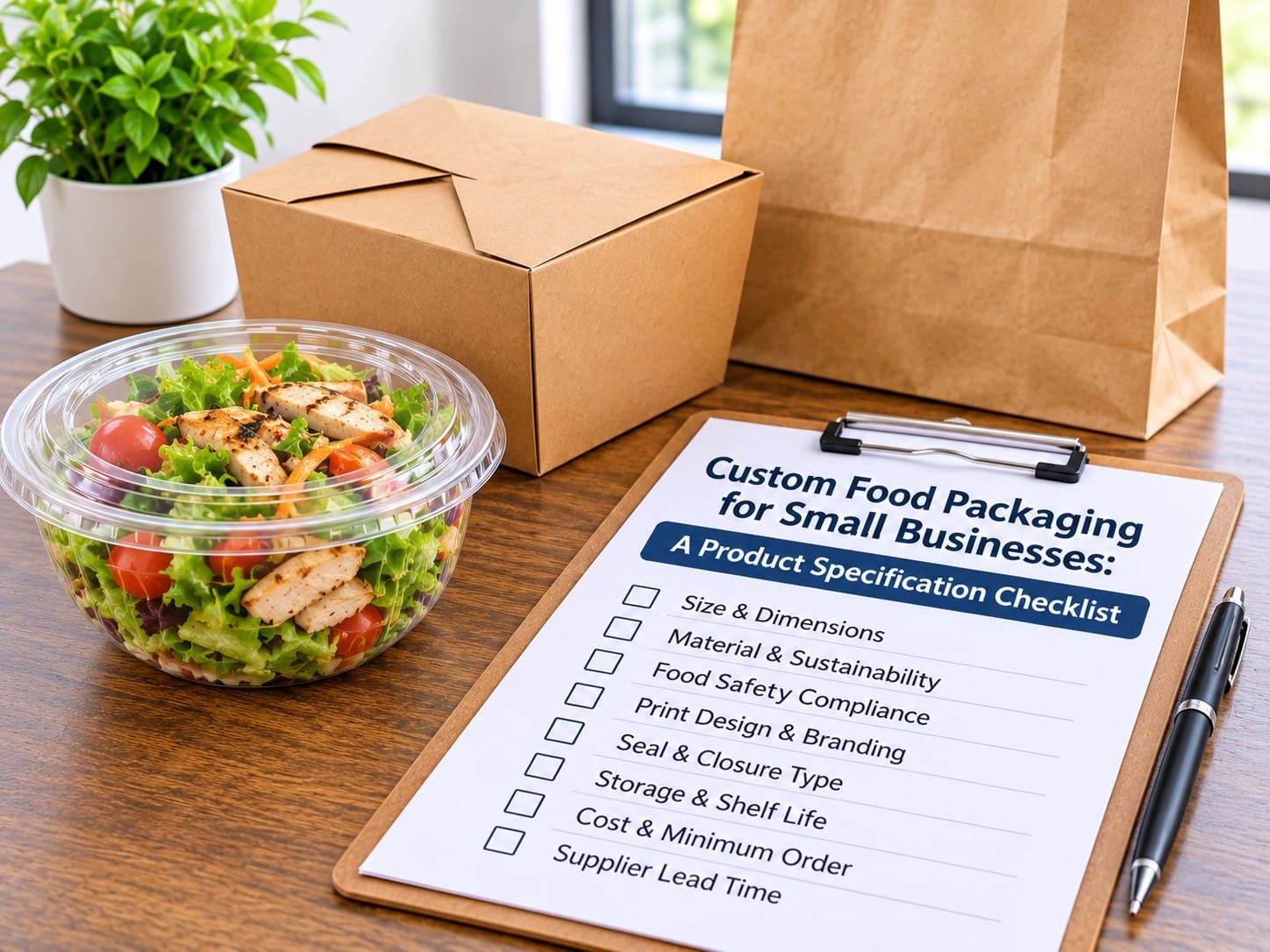
As for the food industry, packaging means much more than just a pack since it must preserve the item, provide it with good quality, create an image of the brand, and influence the consumer’s experience. Correct packaging of food products makes small bakeshops, cafes, cloud kitchens, restaurants, and other specialized food brands distinctive and provides them with fresh and protected food.
What steps must you take to find the right packaging supplies depending on your product, budget, and environmental requirements? Use this easy checklist for product specification.
Why Custom Food Packaging Is Important for Small Business
Custom food packaging makes it possible for small businesses to place their logo, colors, product information, and other brand-related elements on their packaging. That way, the brand message will be consistent, the product will be effectively protected, and takeaway and delivery services will become more professional.
Moreover, custom food packaging is a great way to increase efficiency – no spills, proper portions, and easy food storage and packing. For growing businesses, the use of custom and branded food packaging is a good investment because it allows increased recognition.
Product Specification Checklist for Custom Food Packaging
1. Define Your Food Product and Packaging Requirements
Firstly, determine your food product, which determines the type of material required, dimensions needed, and protection.
- Bakery products: cake boxes, pastry boxes, and oil-resistant bags.
- Heated products: heat-resistant containers with tight-fitting lids.
- Chilled products: leak-proof bowls, salad containers, and dessert cups.
- Dry snacks and foods: pouches, paper bags, and cartons.
- Liquids and sauces: leak-proof cups, bottles, and containers.
Consider factors like food temperature, moisture, oiliness, shelf life, and delivery distances before settling on packaging.
2. Determine Food-Grade Packaging Materials
The choice of packaging material directly impacts the quality of the food and packaging process. Examples of packaging materials include paperboard, kraft paper, corrugated cardboard, and appropriate plastic packaging materials.
When comparing food packaging supplies, check whether the materials selected are appropriate for food contact, temperatures, and storage. Seek information from your suppliers regarding food contact compliance, coatings used, and migration safety test data, if any.
For takeaway food businesses, choose packaging that can retain its shape, prevent leakage, and protect food during transportation.
3. Choose the Correct Packaging Size and Dimensions
The container should have appropriate dimensions that can fit the product tightly without too much excess space. Large packages will increase the consumption of materials and cost of transportation, whereas small packaging will cause the food to be squashed or leak.
Here is a list of items you need to specify on the packaging checklist:
- Inside dimensions – length, width, and height.
- Product weight and quantity.
- Lid fitting and closure.
- Strength and storage requirements.
- Outside carton dimensions – for shipping.
Make sure to request a sample or prototype before ordering large quantities to test the actual fit and functionality.
4. Focus on Customized Printing and Design
Good packaging tells customers about your brand instantly. Provide your business’ logo design, colors, typography, artwork sizes, and printing requirements for your products.
Some popular packaging ideas include printed food boxes, branded paper bags, logo-printed takeaway containers, and custom bakery packaging. Make sure your product name, contents, storage, and allergen information are clearly visible on the package.
Also, ask about the available printing methods, color matching, artwork formats, and setup fees. Sometimes simple and straightforward designs are sufficient for small business packaging.
5. Discover Eco-Friendly Food Packaging for Small Business
The sustainability of your packaging material should be considered when trying to reduce any wastage due to unnecessary packaging. Eco-friendly food packaging for small businesses may include sustainable paperboard, recyclable materials, or compostable packaging appropriate for specific uses.
It’s essential to note that not all sustainable packaging materials are recyclable or compostable everywhere. It would be best to check local waste management facilities, certifications of the materials, grease-resistant coating, and disposal information.
Make sure you consider both sustainability factors, food safety, packaging of products, and cost-effectiveness when deciding on packaging. Be sure not to use vague phrases such as “100% eco-friendly” unless they can be proven.
6. Minimum Order Quantity and Cost
When ordering from food packaging suppliers, small business owners should ensure that the order quantity requirements and costs are reasonable. Try to get a quote that shows per-unit cost, printing/plate cost, tooling cost, sample, shipping, and applicable taxes.
Always compare suppliers based on the total landed cost as opposed to just per-unit cost. Find out if the supplier offers low-MOQ custom food packaging and reorder quantities.
7. Ensure Quality, Compliance, and Delivery
Check the quality control procedures, production period, and replacement policy in case of defects with the supplier before placing the order. Get samples physically to check the lid sealing, stacking ability, grease resistance, printing quality, and how it performs in real-life settings.
Ensure that all relevant labeling and food contact rules are verified and check documentation for your target market. Documentation reduces misunderstandings and improves consistency with repeat orders.
Conclusion
Custom food packaging helps small businesses keep food fresh, establish their brand, and save on costs. This checklist can guide you as you compare the different packaging material options, sizes, printing methods, sustainability, and suppliers.
Yiruixing Packaging is a great place to start your search for packaging for your food products. Contact Yiruixing Packaging for consultation about your product specifications, customization requirements, and order quantity. Get samples where available to make informed decisions on food packaging.
FAQs
How does food packaging protect the food from texture change during delivery?
Choose either the moisture-resistant or the ventilated food packaging depending on your food type to ensure its freshness and crispy texture.
What information should be included in the food packaging specification sheet?
Include materials, size, capacity, printing, type of closure, volume per order, and food contact specifications.
How can small businesses save on custom packaging costs?
Choose standard-size boxes, simple designs, and low MOQ printing solutions to cut costs and prevent overstock.
How do you test food packaging for delivery?
Test for leaks, lid security, stacking strength, heat stability, and food display during the delivery process.
What should businesses consider before going green with their packaging?
Check for material safety, environmental credentials, coatings, and local disposal solutions.