
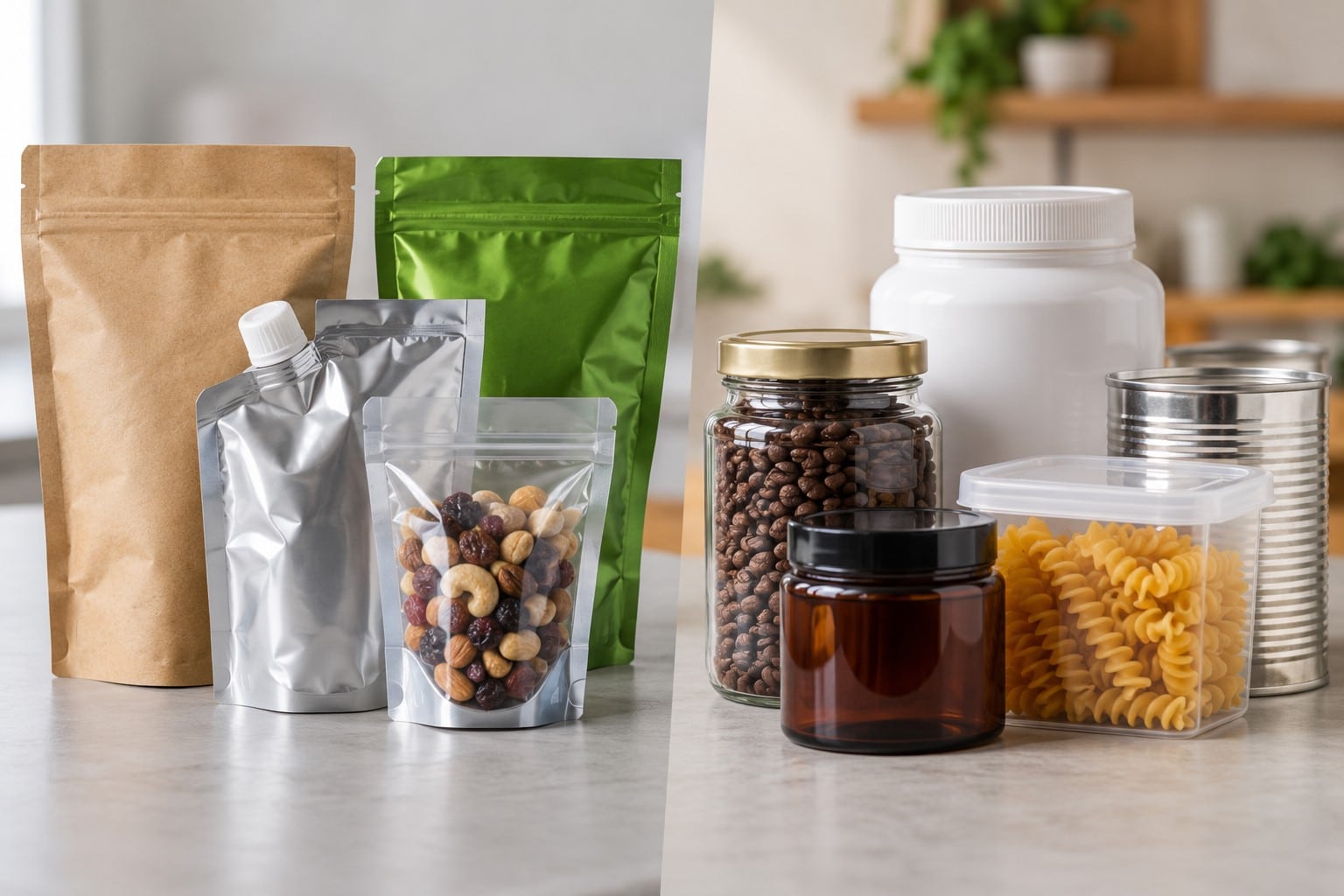
Flexible Pouches vs. Rigid Packaging: Which Should You Choose? – Selection of proper packaging may influence the safety of the item, the cost of delivery, shelf display, storage, and convenience for consumers. Nevertheless, when choosing between flexible pouches vs. rigid packaging, which one to select?
The answer depends on your product, distribution needs, budget for packaging, required shelf life, brand image, and concerns about sustainability. If lightweight and compact packaging is needed, you can go with flexible pouches. If structural integrity and stackability of your products, you may prefer rigid packaging.
Here we are going to make a comparison between flexible pouches and rigid packaging to give you some practical recommendations.
What Are Flexible Pouches?
Flexible pouches are types of packaging made of film, laminate, or other flexible materials that allow bending and shaping according to the product. Some common types of flexible pouches are stand-up pouches, zippered pouches, flat pouches, spouted pouches, and barrier pouches.
Stand-up pouches are highly popular due to the combination of portability and attractive appearance. They can also contain resealable zippers, tear notches, handles, and spouts.
When protection against water, oxygen, and light is required, special types of multilayer pouch construction can be used to achieve the desired level of barrier properties, which will depend on the specific material and film structure, not on the flexible nature of the package.
What Is Rigid Packaging?
Rigid packaging has a constant shape and consists of plastic bottles, jars, tubs, cans, trays, rigid boxes, and other types of containers made of rigid plastics, glass, metal, and other structural packaging materials.
The most significant feature of rigid packaging is structural rigidity and high resistance to crushing. In addition, rigid packaging has predictable stacking, handling, and storage characteristics, making it appropriate for packaging products requiring good physical protection.
Differences Between Flexible Pouches and Rigid Packaging
1. Weight and Transportation
Flexible pouches have low weight and consume less packaging material compared to many rigid packaging formats. Flexibility and smaller volume can help improve transportation and storage efficiency.
On the contrary, rigid containers have pre-made shapes that they retain during shipping. This may take up more space, especially if empty rigid containers have to be shipped or stored.
Use flexible pouches if: Package weight reduction and logistical considerations are your main objectives.
2. Product Protection
The rigidity of rigid packages makes them excellent protectors for products susceptible to crushing or stacking pressures.
Nevertheless, flexible packaging does not necessarily mean lesser protection. Properly designed laminate structures for flexible pouches have excellent moisture, oxygen, and light barrier properties, while good sealing methods can enhance package integrity.
Use rigid packaging when: Product strength is an issue.
Use flexible packaging when: Barrier protection and low weight are important.
3. Convenience and Consumer Experience
Pouches can have characteristics such as a zipper for re-sealing, easy-opening tear notches, handles, and dispensing spouts. They can also be made convenient by their flexible nature for multiple-use products.
Rigid packaging is known for being reliable and durable, and it can offer controlled dispensing via caps or pumps.
Choosing between the two will be based on the usage pattern of the customer and whether resealing, dispensing, or portability is required.
4. Branding and Shelf Appeal
Apart from protecting the products, packaging can act as an advertising tool as well.
Flexible pouches offer extensive printing surface along with customizable sizes and designs, and even the stand-up style can offer high visibility on shelves while occupying limited space.
Rigid packaging can offer a premium appearance and uniform structure, which could be very useful for some brands.
5. Sustainability Considerations
Neither flexible nor rigid packaging will automatically be the better sustainable option in each case.
Flexible packaging offers packaging weight savings and efficient transportation, while certain rigid packaging types will ensure durability, reusability, or recycling. Environmental performance will depend on material choice, manufacturing process, transportation, protective functions, and end-of-life options.
Thus, it is necessary to assess the entire packaging lifecycle rather than selecting one package type according to material weight only.
Flexible Pouches vs. Rigid Packaging: What Type Do You Choose?
You should choose flexible packaging if you value:
- Lightweight packaging
- Effective transportation and storage
- Re-sealability or ease of opening
- Custom-printing opportunities
- Packaging size and shape flexibility
- Barriers for food, pet food, personal care, and other products
Rigid packaging will be a good option if you need:
- High protective performance
- High crush resistance
- Good stackability
- Container shape stability
- High strength or possible reuse
In some cases, using both packaging types can be the best solution for a particular brand. The decision should depend on the product, fill process, supply chain, retail environment, and customer experience and not on the popularity of either flexible or rigid packaging type at the moment.
Conclusion
Ultimately, the decision between pouches and rigid packaging will depend on your product and business needs. Flexible pouches can provide a package that is light, compact, and can be customized to your needs, while rigid packaging can offer structural durability and physical protection.
If you are searching for customized packaging services, Yiruixing Packaging provides various packaging products such as stand-up pouches, customized plastic containers, corrugated boxes, food packaging, and other customized packaging solutions. With more than 14 years of experience and worldwide delivery, Yiruixing Packaging will help businesses create packaging that meets their product and brand needs.
Yiruixing Packaging specializes in customized packaging solutions that are tailored to your product, brand, and supply chain needs. Contact Yiruixing Packaging to discuss your packaging needs.
FAQs
Are flexible pouches less expensive than rigid packaging?
Pouches can be less expensive because they are lightweight and compact, but the price will depend on material properties, printing, packaging quantity, filling machine, delivery, and many other factors.
Can pouches be used for food packaging?
Yes, flexible pouches are frequently used in food packaging, such as snacks, coffee, pet foods, sauces, powders, and many other items. The choice of the pouch construction must correspond to the moisture, oxygen, light, and seal protection needed for your product.
Is rigid packaging stronger than flexible packaging?
Rigid packaging is stronger in terms of structural and crush protection. At the same time, flexible pouches can effectively protect your product, provided that you use the right material, laminate, sealant, thickness, and package design.
Which one is more sustainable: pouches or rigid packages?
The sustainability of packaging cannot be generalized. The answer will be dependent on the materials used, package weight, transport conditions, recyclability, possibility of re-use, and disposal infrastructure, among other parameters.
What kind of packaging should I choose?
First of all, define what kind of protection, shelf life, filling process, transport conditions, target market, packaging size, branding, and budget you need. Then compare flexible and rigid formats based on overall performance instead of packaging price alone.