Chances are, if you’ve done some endless scrolling over the past few months, you’ve been bombarded with brands featuring packaging that speaks to you directly, as if it knows you personally – whether it’s that coffee bag with your name on it, a skincare package that shifts hues post quiz, or the humble chip bag designed for your current mood. It all seems utterly marvellous. But behind that glittering façade, many mid-sized businesses are posing a burning question that no one’s quite saying out loud… is there an ROI on AI-driven personalised packaging or is it an expensive tech gimmick that big corporations can afford? Let’s keep it real.
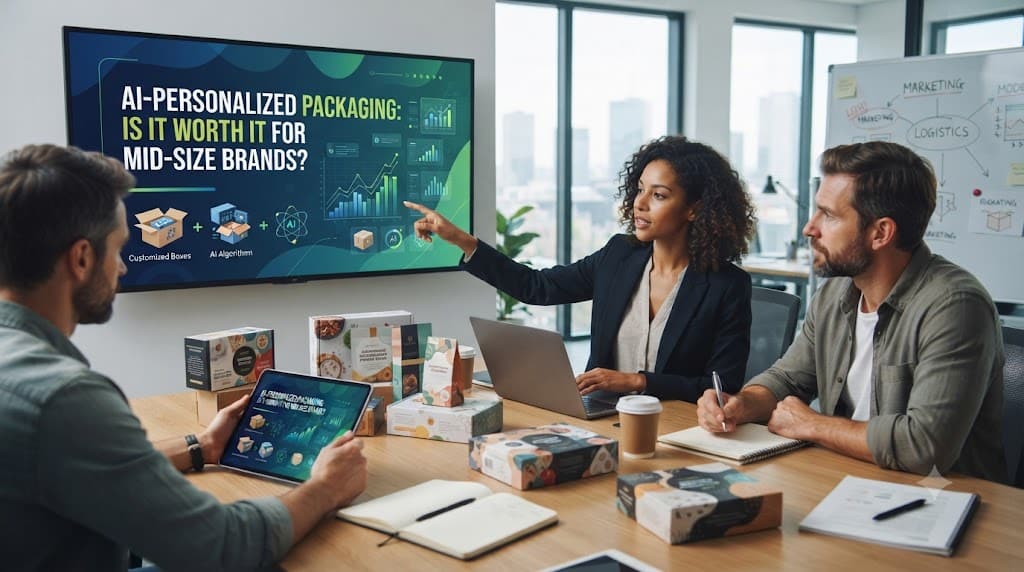
In this blog, we give you proper information about AI-Personalized Packaging: Is It Worth It for Mid-Size Brands? Stay tuned with this blog.
What AI-Personalized Packaging Actually Means
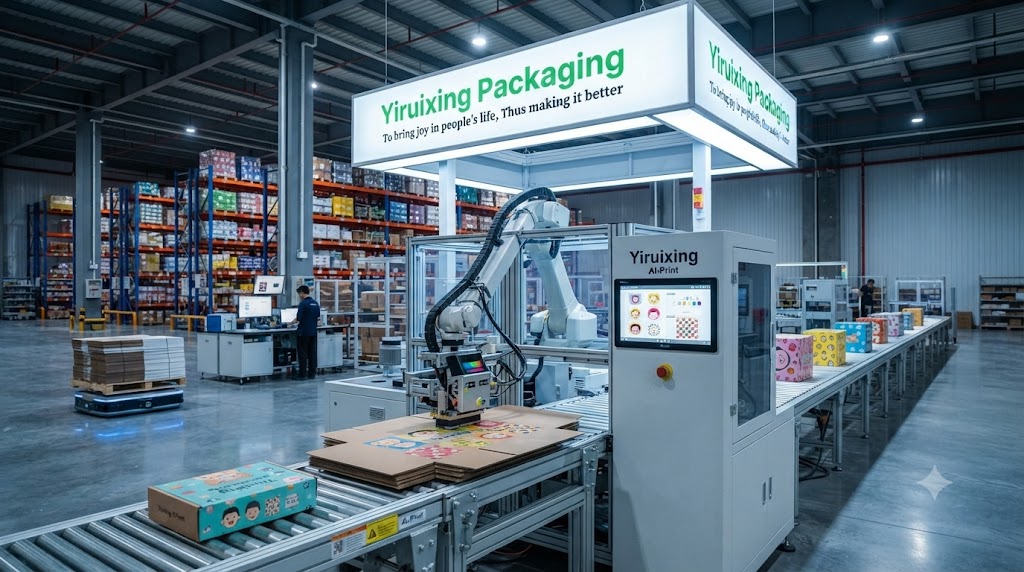
As an enterprise evaluating investment, it is important to understand what exactly is being brought to market. AI-driven personalisation on packaging involves the use of data to create packaging design, messaging or variations at scale. This is very different from creating custom boxes for a one-off VIP campaign.
Instead, it refers to automation being used to create hundreds or thousands of personalised packaging variants without human designers tweaking every single version individually.
For a Fortune 500, a fully automated global line could churn out region-specific labels. For a smaller company, this could be as basic as a service creating seasonal design variations, or personalising inserts according to segmentation. The tech should be scalable, but it does not necessarily mean we should think big when aiming for personalised boxes.
Why Bigger Brands Jumped on This Trend First
There are good reasons personalisation got started with big business way before smaller companies were even considering it. When the cost of entry is high, the money is in experimenting with a diverse, huge customer base that your ordering process can support, when AI that takes personalised, scalable data is affordable, and the order volumes justify making individual customisation cost-effective, or profitable. Even a marginal percentage improvement per unit adds up to massive, real numbers.
For your average mid-sized company though, the budget is a bit tighter, order volumes are not quite in that ballpark and every single piece of packaging has a significant financial impact. That’s just not where to think in large-scale personalisation – think smarter instead of bigger.
Where AI Personalisation Genuinely Helps Smaller Operations
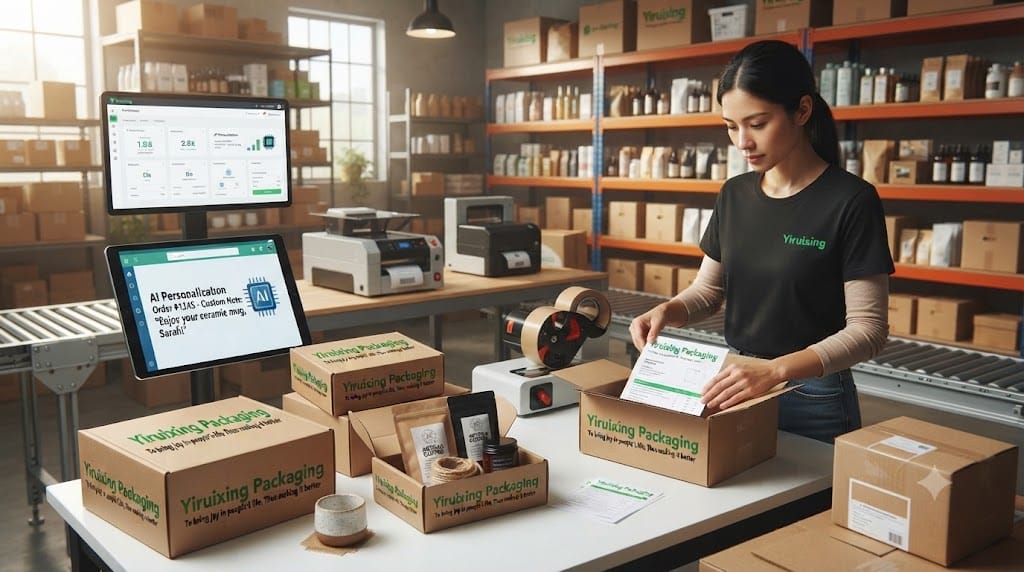
Even without that enterprise level budget, middle-tier brands still have real benefits that they are missing.
- Faster iteration: AI could potentially produce a variety of packaging designs in just minutes instead of weeks being spent negotiating feedback between you and an agency.
- A segmentation, not full customisation: Instead of one single design, brands could have AI develop maybe 3-5 designs intended for separate customer types (new, loyal or seasonal visitors to a store) instead of fully individual packaging and then printing individually which is considerably more costly.
- More sophisticated shelf-testing: A brand could potentially test how the packaging will perform under a variety of different light levels or competitor displays without having to print full orders and test what they produce in a real store with trial and error costs saved.
The Real Costs Mid-Size Brands Need to Consider
Where a lot of brands fall down with AI-you can get cheaper or free AIs when you start-but the other costs rack up incredibly. Changing your print setups, smaller batch runs, changing your packaging material, having people do QA checks…these all cost more on a per-unit basis if you aren’t at ludicrous scale.
Also need the skills-there are some skills that need to be acquired. Someone on your team needs to know how to effectively brief AI; how to check brand consistency of AI’s output. How to avoid designs which look computer-generated, but instead well thought out. Otherwise they’re never consistent nor easy to understand the designs are personalised
How to Know If It’s the Right Move for Your Brand
While “is AI packaging a trend?” is easy to answer, mid-size companies need to ask themselves three operational questions: is personalisation really important to consumers (or is it solving a non-issue)? Is the current supply chain equipped to produce smaller, more frequent print runs without breaking the bank? Is there a measurable indicator – increased re-purchasing, unboxing social shares, return rates that decline – that signifies success?
When the answer to most of these questions is an affirmative, then a small pilot test run is often the best, lowest-risk initial plan.
Final Thoughts on Making Smart Packaging Decisions
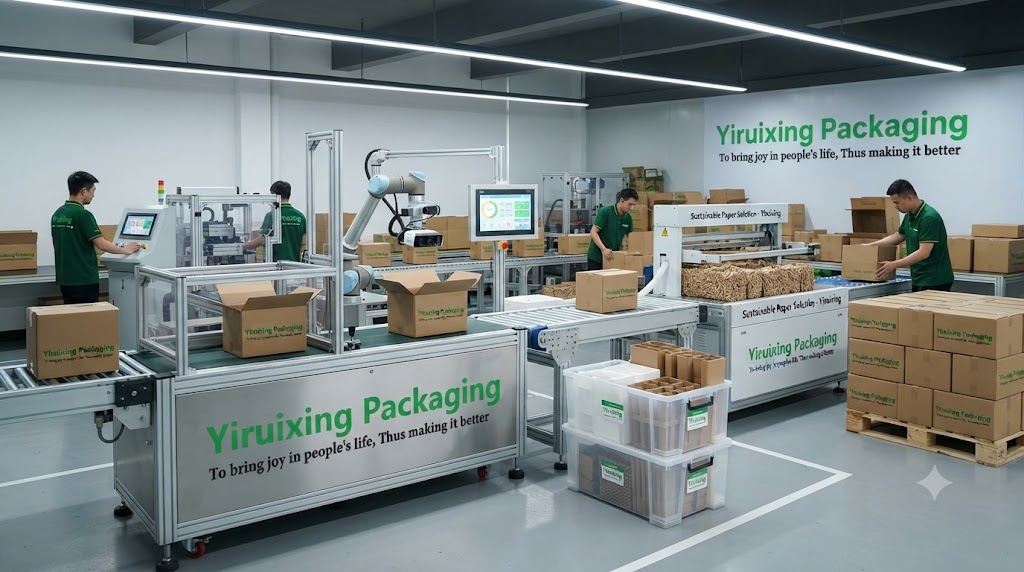
Smart-Segmentation isn’t A “one size fits all” trend, you don’t have to embrace an everything and nothing approach either. We often see midsize brands embracing more intelligent segmentation and quicker design cycles without having to play in the arena of Fortune 500s. Testing what works, measuring how it is received by the customer, and only scaling when it works is essential for both your brand and your cost efficiencies.
Partner With Experts Thinking about introducing smarter, more responsive packaging without the production complexity? Yiruixing Packaging helps your brand find the right balance between being ahead-of-the-curve and the real-world considerations of a growing business.
FAQs
Is AI-personalized packaging only for big brands with huge budgets?
Actually no. Large brands did it first because they had the volume and the data to make it a commercial win. Smaller takes on the concept – i.e., the equivalent of a few customised design versions, as opposed to pure customisation for every item – absolutely make sense for companies in the mid-market space.
Will this actually increase my sales, or is it just a nice-to-have?
This depends upon your product and target customers. If the customer would love being “recognised”- think personalised skincare brands, food or gifting brands it will encourage a repeat sale and greater engagement. If personalisation is not something your customer will feel good about receiving it is an added expense.
How much more expensive is personalised packaging compared to standard packaging?
Generally more costly because of limited runs and additional design/setup. If you’re only choosing from a small number of variant patterns, it might not be an astronomical increase over ordering one custom pattern for every single person, but still something to anticipate per unit.
Do I need an in-house design or data team to make this work?
Not a full team, perhaps, but definitely someone comfortable giving effective AI prompts and spotting an off-brand result. Otherwise, your design will soon start looking less and less inspired, and more like the same.