
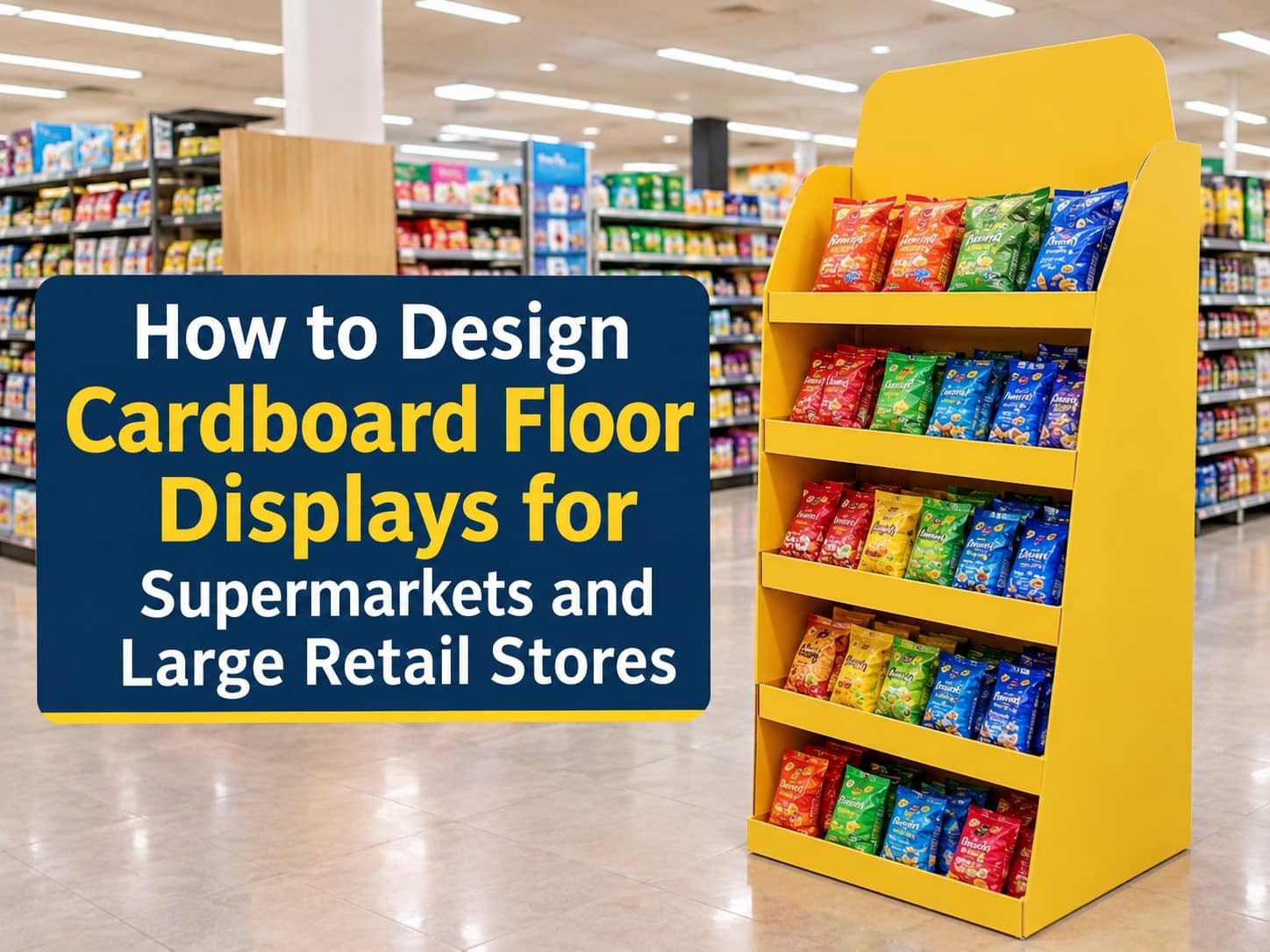
Within supermarkets and big stores, it is key for brands to stand out and engage with customers. As there are so many products on sale, innovative methods must be used to both promote and drive sales. Cardboard floor displays provide a good method for achieving this within the retail environment.
As well as showcasing stock, a well-designed floor display can form a marketing area and effectively convey important brand information. Personalized cardboard displays can therefore convert underused areas of store floors into highly beneficial marketing tools within supermarkets, hypermarkets, and department stores.
So what is required to ensure a durable, visually striking, and functional floor display? Below are key areas to consider when designing suitable cardboard floor displays for supermarket and big store environments.
Know Your Product and Display Needs
Initially, knowledge of the products that will be displayed on the floor display should be established.
Consider the weight, dimensions, and type of packaging of the products. For example, light items may work well on open shelving. However, more substantial packaged items, such as drinks in bottles, will require a corrugated material and adequate structural support.
Consider:
- The weight and size of the product.
- How many items can be placed on a shelf.
- The height and width of the display.
- Customer access.
- The length of time for which the display will be utilized.
Displays should be designed so that they are suitable, well organized and fit for purpose.
Suitable Corrugated Material
Depending on the material, cardboard can offer differing levels of strength. Given the high level of customer engagement with supermarket displays, displays should be sufficiently strong for this.
As mentioned previously, corrugated material is widely used as it is strong and relatively lightweight.
Depending on the product, single- or double-wall corrugated can be used. Furthermore, strengthened card sheet can also be implemented to further improve strength.
This will be dependent on many factors, including product weight, shelf size, transport, and use.
Design An Eye-Catching and Brand-Appropriate Display
Many people tend to make snap decisions as they browse around supermarket aisles. Therefore, a strong brand and visually engaging display is important.
Appropriately utilize brand colors, logos, and both product- and brand-related imagery to effectively convey a visual representation.
Important considerations for a good display design may include:
- Eye-catching signage detailing promotions.
- High-quality product images.
- Color contrasts.
- Brand and message-related imagery.
- QR codes linking to additional information about products.
Whilst effectively communicating the value of the product, good design should also avoid unnecessary complexity.
Design Functional and User-friendly Displays
Although designs should be visually appealing, they also need to be user- and staff-friendly. Poorly designed display shelving, together with poor customer and staff access and an unstable display, could all adversely affect the display.
For bespoke supermarket cardboard displays, correct shelf depth, product positioning and customer access are points that should be analyzed.
Multi-level shelving can be a highly beneficial addition as it allows for greater product visibility. In addition, sloping shelving can also be used to further boost product visibility, particularly for smaller items.
Other important elements for a display design are:
- Good customer access.
- Strong supporting framework.
- Front-facing promotional signage.
- Simple restocking process.
- Well-structured product organization.
All of these will aid in ensuring good overall display organization during a promotional period.
Structural Stability
Structural stability is of great importance for cardboard displays, again particularly within supermarkets given the high level of customer engagement.
Correctly designed foundations, balanced weight and strong shelves are all essential.
Prototypes should be produced so that information can be gathered regarding shelf strength, product positioning, ease of assembly and general structural stability. This information can then be applied to large-scale manufacture.
For extensive displays, the retailer’s floor area requirements, aisle headroom, overall display height and restocking process should also be analyzed.
Convenience of Transport and Assembly
Within large retail promotions, there may be occasions when numerous displays need to be transported and assembled within various stores. Therefore, it makes sense to consider both the transport and assembly of displays at an early stage in the design process.
Utilizing ‘disassemble-able’ and flat pack display designs will be a good way to reduce the space needed for transport and storage. Likewise, simple assembly combined with clear guidelines and ‘click together’ sections, as well as simpler design elements, will further facilitate assembly by store staff.
A well-designed POP display should be straightforward to transport, assemble, place and stock – and should not require specialist equipment to do so.
Utilize Eco-friendly Materials
Increasingly, retailers are seeking to adopt more eco-friendly methods. Effectively designed cardboard displays can allow companies to achieve their eco-conscious retail goals, as paper-based materials can be recycled.
Analysis of the most appropriate materials, alongside recyclable corrugated board and green printing options, will all prove beneficial in this regard.
An effectively designed eco-friendly cardboard display successfully marries good visual appeal, function, and environmental material properties.
Conclusion
To effectively design functional and visually engaging cardboard supermarket and large retail displays, the right balance of strength, brand relevance, shelving, and function is essential. Good displays can further boost product visibility, structure product presentation, and raise brand awareness at the point of sale.
Looking for distinctive cardboard floor displays for your retail business? Then visit Yiruixing Packaging. They can supply you with distinctive cardboard display shelving, displays, and POP displays. By analyzing your product measurements, brand, and merchandising requirements, Yiruixing Packaging can tailor retail displays for your business. Contact Yiruixing Packaging to develop distinctive retail displays for your products.
FAQs
What is a cardboard floor display?
Essentially a freestanding paperboard or corrugated cardboard structure, cardboard floor displays are designed for use in supermarkets, retail stores, and promotional settings to showcase products.
Which type of cardboard should I use for my supermarket displays?
Depending on the product and display requirements, together with the length of time for which the display is required, single- or double-walled corrugated cardboard may be suitable.
How can I enhance the appearance of my cardboard display?
Appropriately use brand colors; promotional details; graphics; and effectively organize both the shelves and the products on display.
Can cardboard displays be used to display heavy products?
Yes, although the correct grades of corrugated cardboard together with adequately strong shelves and foundation must be incorporated. Before production, the display needs to be tested to ensure that it can support the anticipated weight of the product.
Can cardboard displays be adapted for different supermarkets?
Indeed. Displays can be adapted in relation to their size, shelving layout, graphics, color, and structure.