
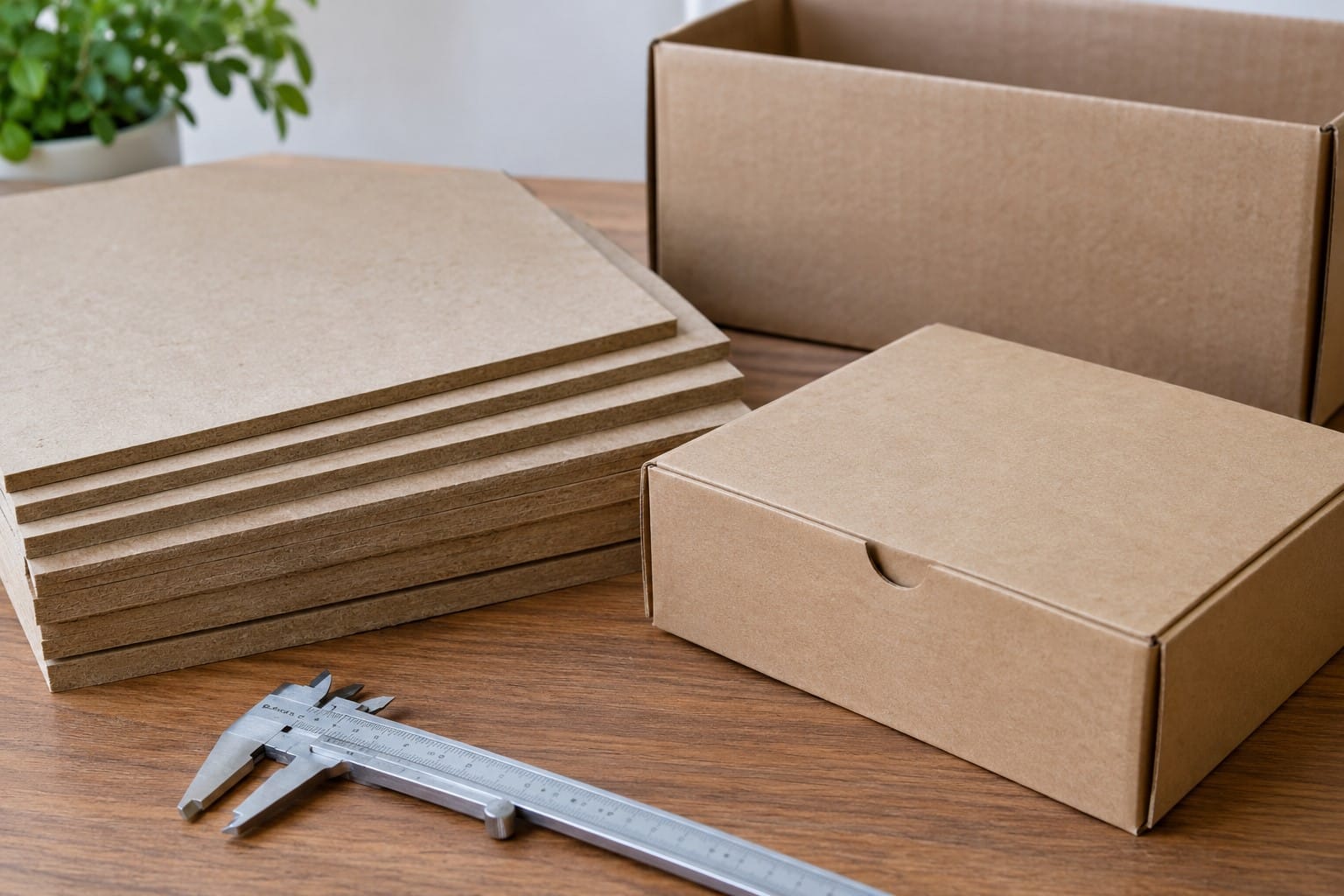
Chipboard Box Thickness and Strength: What Wholesale Buyers Should Specify – The proper selection of packaging plays an important role in protecting products, saving money, and projecting a good company image. For wholesale buyers, understanding chipboard box thickness and its strength is important since this knowledge will help avoid overpaying for unnecessary packaging materials. The appropriate specification of boxes may help improve your product presentation, prevent damage, and handle the shipping process.
No matter whether you buy packaging for cosmetics, electronic devices, retail items, gifts, or light consumer goods, your knowledge of what to ask about before buying bulk packaging can play a big role.
What Is Chipboard Box Thickness and What Are Its Features?
The chipboard box thickness is the thickness of the board material from which this box is made. Usually, it is measured in millimeters (mm), points, or calipers, depending on the manufacturer and market.
Generally, the greater the thickness of the chipboard is, the higher its stiffness and bending strength will be. Nonetheless, there is more to the strength of the box than just its thickness. The density of the paperboard, the fiber structure, surface coating, dimensions of the boxes, production process, and quality are some other factors that influence its strength.
Wholesale buyers would have to make a compromise in terms of strength, appearance, weight, and cost when selecting the proper chipboard packaging material. The higher-quality gift box would probably have to possess rigidity, whereas for packaging lightweight retail goods, less material would suffice.
How does Thickness of Chipboard Affect Box Strength?
This issue is especially crucial when making a decision on which packaging material to choose when placing a bulk order.
- Thin chipboard: Would suit products that are light in weight, inserts, dividers, and some kinds of retail boxes.
- Chipboard Medium: This would be appropriate for most cosmetics, stationery, and accessories, as well as any other kind of merchandise, given that the box design would allow for it.
- Chipboard Thick: This particular chipboard would be appropriate for presentation boxes and gifting packaging where more weight is desired.
This classification represents only rough suggestions and not absolute standards of thickness. Depending on the weight, size, handling, and use of the product, you should determine the appropriate thickness.
However, it is important to remember that there are other options available for the reinforcement of a chipboard box than increasing the board thickness – for example, folding the box edges, corner stiffeners, internal reinforcements, etc.
What Are the Characteristics Wholesalers Should Request for Their Chipboard Boxes?
To prevent miscommunication regarding the quality of the chipboard boxes you intend to order, list the technical characteristics.
1. Specify the Exact Board Thickness
State precisely the desired thickness of the board in mm or another unit of measurement that has been agreed with the supplier. Indicate the nominal thickness of the board and acceptable tolerance for production.
Avoid using expressions such as “thick board” or “strong chipboard.” This will help you compare offers and examine samples.
2. Specify the Required Strength
Indicate the intended use of the packaging. Will the packaging have to hold light product on display in a shop, protect the product in transit in the same place, or be stackable in the warehouse?
If performance is required, specify testing or performance requirements. Based on its use, these could include bending strength, edgewise compression strength, stacking performance, or box testing.
Important: Please note that the thickness of the chipboard alone does not guarantee effective shipping capability. Standard chipboard and rigid presentation cartons are not necessarily identical to the shipping-grade corrugated boxes.
3. Define Material Quality and Specifications
Find out more information on the structure of the board, its density, recycled percentage, finish, and batch differences. It will affect the rigidity of the package, the quality of printing, and the durability of the product.
As far as the branded packaging is concerned, it is crucial to guarantee that the right finish of the material is used for printing and finishing.
4. Provide Product Weight and Box Dimensions
The weight of the product, its dimensions, and internal components are required by your supplier to select an appropriate box design, although sometimes larger boxes need more rigidity despite the lightness of the product they carry.
Indicate if there will be inserts, trays, partitions, or cushioning in the box – these elements can contribute to better stability and less shifting of the product.
5. Approval of the Production Sample
Before ordering a lot of boxes, try requesting the manufacturer of a sample of the box based on your design using the proposed material and see how rigid, sealable, fitting, finished, and handling-resistant the sample can be.
It is very important to have an approved sample in order to use it as the basis of production in bulk.
How Can Buyers Balance Strength and Packaging Cost?
There is no guarantee that the most cost-efficient option would be the thickest board available. The additional material means nothing but increased costs in per-unit price, storage volume, and transport weight.
What you need to do is adjust the packaging requirements to match the level of risk. Light goods may require a light board only, while luxury packaging may require the thicker one.
In order to have an objective comparison between different packaging providers, the same board thickness, board size, finish, structure design, and quality standards should be considered. Think of overall cost, including protective qualities, look, and reliability of production.
Wholesale packaging purchasers should care about strength, not board thickness. This will improve purchasing decision-making, eliminate excessive use of material, and help ensure consistent packaging quality.
Conclusion
Selecting appropriate chipboard box thickness and strength allows wholesale customers to find a good compromise between protection, appearance, and economy. Proper material specification and expectations, along with the approval of samples, will minimize uncertainties.
For all your packaging needs that suit your company, head over to Yiruixing Packaging. Look through the types of packaging available and consult with your supplier regarding the size of your products, materials needed, and brand needs.
FAQs
What thickness is recommended for chipboard boxes?
There isn’t an exact thickness that will suit all purposes. It is dependent on a range of things like weight of products, dimensions of the box, how the box is designed, etc. Have your supplier advise you on what thickness is best and try a sample out.
Does greater thickness increase box strength?
Not necessarily. Greater thickness can make the box stiffer, but there are other factors that influence the strength of a box, such as density, material, shape, glue joints, and design. Performance tests are necessary for special handling and stacking requirements.
How is the thickness of chipboard measured?
The thickness of chipboard is normally measured in mm or points. The wholesale buyer should clarify which unit is going to be used by the supplier and ask about their tolerances.
Are chipboard boxes suitable for shipping?
The suitability of chipboard boxes for shipping depends on the particular products and shipping conditions. In some cases, corrugated boxes may prove to be a better choice than chipboard boxes for heavy or harsh handling and transit conditions.
What should the buyer know before ordering bulk boxes made from chipboard?
Thickness of the board, its grade, dimensions of the final product, design, finishing and printing possibilities, tolerances, and performance standards should all be confirmed. The product sample should be approved before mass production is approved.