Let’s be honest: packaging used to be simple. You select a jar that was the right size for your product, looked good, and was within your price range. However, these days everyone is wondering if the packaging is biodegradable, recyclable, or some mix thereof. If you’re one of the many brands asking yourself which label actually matters, rest assured, you’re not alone. There are many brands, particularly those ordering a plastic jar in China and looking to get their story straight before selling their product, who will find that the great brown jar is not as complicated as it might sound. Simply put, there are huge differences between biodegradable jars versus recyclable options. In this article, we’ll outline what each means and when you might want to use one or the other.
What Are Biodegradable Plastic Jars and How Do They Actually Work?
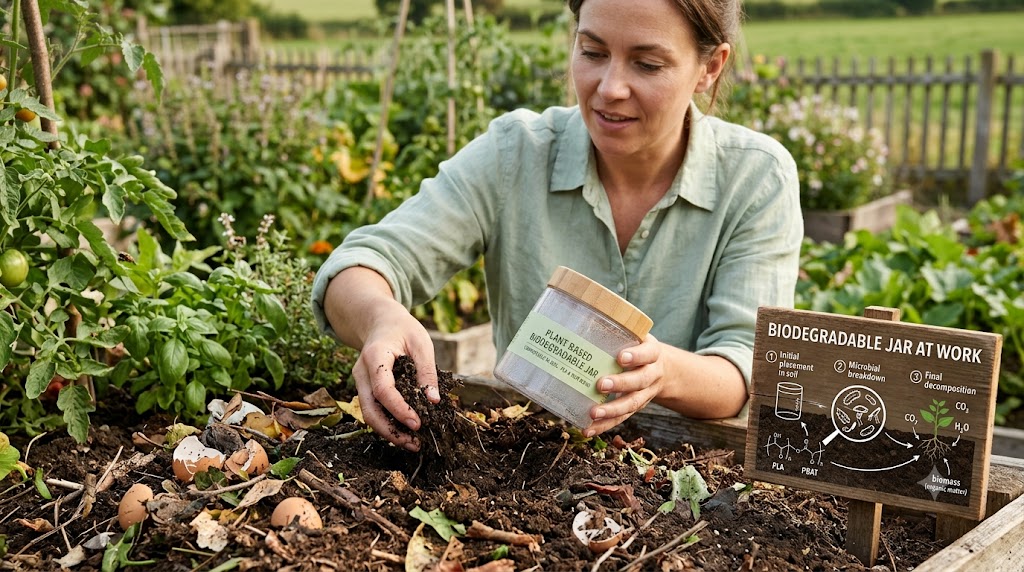
Biodegradable plastic jars are formulated from biodegradable plastics that decompose by the action of living organisms (mainly microbes) into water, carbon dioxide and biomass. The most common plastic material used is PLA (polylactic acid), PBAT or blends with starch. But “biodegradable” is not “disposable”. The majority of biodegradable plastic jars require industrial composting conditions, with equal helpings of heat, moisture and time, to break down effectively, and if you throw biodegradable plastic jars in your landfill or leave them in the field, they may take a long time to degrade. Buyers should always demand certifications like EN 13432 or ASTM D6400 from the seller, rather than simply taking a green label at face value.
How Recyclable Plastic Jars Work and Why They Remain Popular
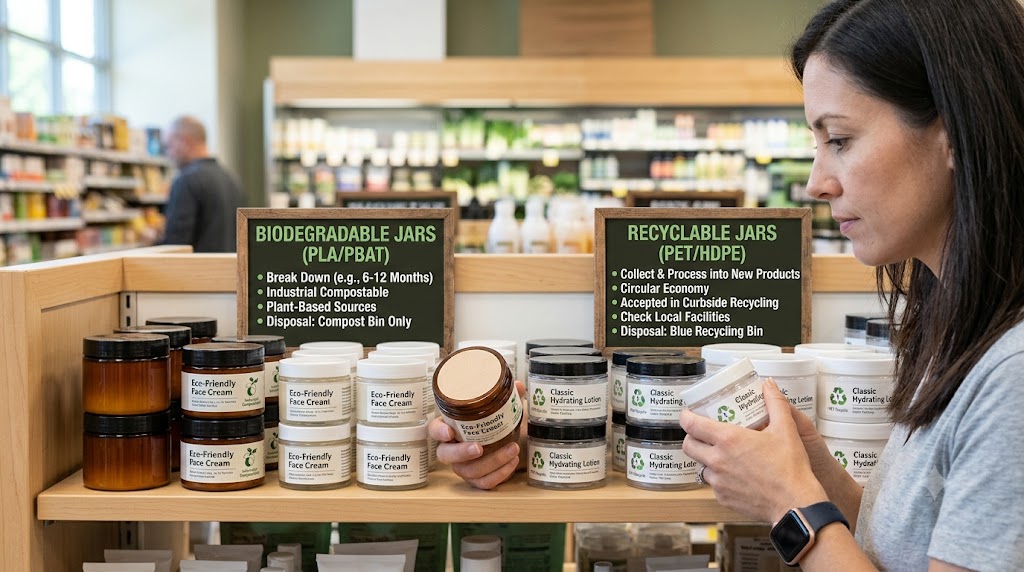
Some recyclable plastic jars are PET, PP or HDPE (which have their own dedicated recycling streams in many places). One of their strengths is that most people already recycle PET, HDPE and PP. These jars are sturdy and light, clear (PET), and they provide a barrier fit for many types of creams, supplements, foods and powders. Recycled content can also be added to the jar for a more circular system. But depending on where you are and how well you sort, putting “recyclable” on a jar doesn’t actually mean it will be recycled.
Key Differences Buyers Should Compare Before Placing an Order
Here’s a simple way to think about the trade-offs:
- Cost: Per unit costs for biodegradable jars tend to be higher based on raw materials costs and smaller production quantities. The per-unit cost of recyclable jars tends to be cheaper.
- Performance: Recyclable jars have greater barrier properties and can have a longer shelf life. Biodegradable jars might be more prone to the effects of heat, moisture, and oil.
- Disposal: Biodegradable jars need composting access; recyclable jars need a working recycling system.
- Brand image: Biodegradable jars indicate innovativeness; recyclable jars indicate convenience and dependability, and technical advantage is of more sales importance.
Which Products Suit Biodegradable Jars and Which Suit Recyclable Jars?
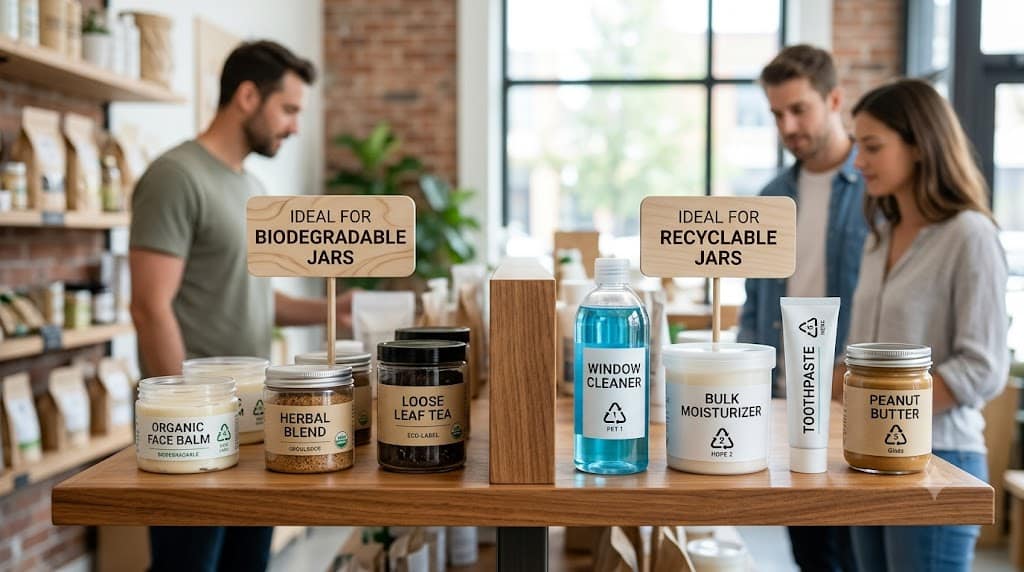
If your product is dry or low in moisture, biodegradable plastic jars are an attractive option for bath salts, herbal teas, solid balms, cosmetics powders and more when customers know they truly appreciate eco-friendly packaging. The more watery your product is, the more predictable a recyclable jar will be. This is especially true for water-based creams, sauces and nutritional supplements which, with a good shelf life, really benefit from recycling.
Smart Tips for Buyers Planning to Buy Plastic Jars in China
China is the largest source of jar manufacturers, and there are many options for materials and costs. Prior to placing your order, ask for material certificates and test reports, and request samples to inspect the fit of the lid, sealing capabilities and suitability with your formula. Verify minimum order quantities (some biodegradable jars require larger orders), and be cautious of buzz words without scientific explanation. A good supplier will be transparent about composition, composting conditions and recycling numbers.
Final Thoughts: Choosing the Right Jar for Your Brand
In this showcase of biodegradable plastic jars vs recyclable jars, there’s no clear winner. Which is right for you will depend on your product, your budget, your customers and the sort of packaging disposal infrastructure there is in your market. That’s where your priorities come in. List out what they are, then look at the options rather than rushing after the one that’s suddenly trendy. If you’re ready to make a comparison, Yiruixing Packaging can help you identify the right quality jars, whatever the packaging label, and pair you with the right product to showcase your brand.
FAQs
Are biodegradable plastic jars really better for the environment than recyclable ones?
It really depends on how you dispose of them. Although biodegradable jars will break down in the right environment (most often industrial composting), if your customers don’t have access to that then the more ‘recyclable’ jar that actually gets recycled is perhaps a better alternative. Consider where you’ll end up with your jars and not just what they’re made of.
Will biodegradable jars break down on my shelf or in my customer’s bathroom?
Nope, and it’s a valid concern. Degradable jars aren’t eating away at the materials during storage or regular use. Instead, they’re doing it once composting conditions-heat, water, and microbial action-are present. Still, extreme heat and moisture in storage can impact certain materials, so it’s a good idea to do a quick sample test.
Can I use biodegradable jars for creams, lotions, or oily products?
Yes, but tread with caution. Certain biodegradable materials respond differently to moisture and oils, which can impact the vessel’s shape or shelf life. Test our plastic jars with your formula before placing a large order. Many brands are more comfortable using recyclable jars for water-based or oil-heavy formulas.
Are biodegradable jars much more expensive?
Typically, yes. They generally are more expensive per item because of material costs and the size of the batch. The difference can shrink with bigger orders, and some brands feel the extra is worth it if environmentally responsible packaging is a major selling point.