
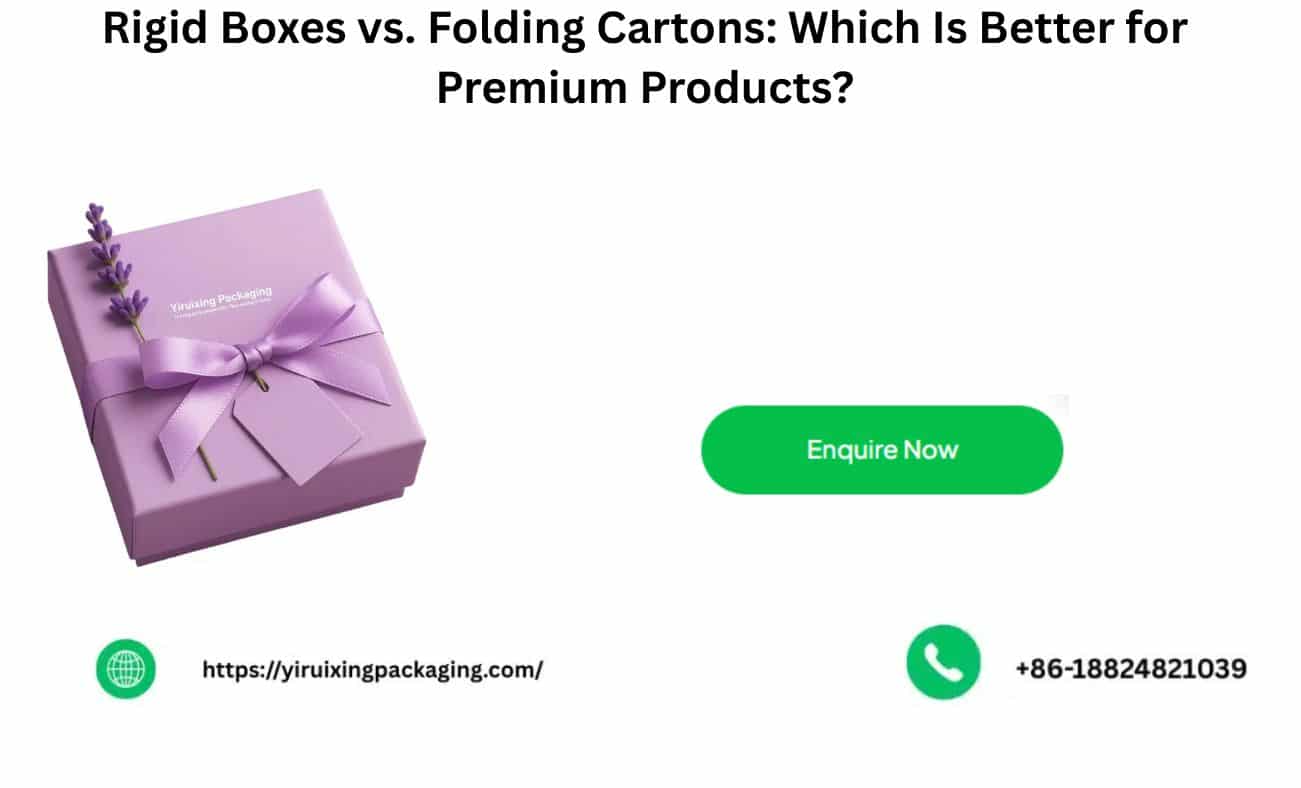
For luxury products — beauty, jewellery, high-end technology or gifting – the box is sometimes the first tactile experience that a customer will have of your brand. Rigid boxes (thick-board, two-piece or magnetic-lid varieties) are built to give a luxury “moment” — heft, crisp edges and custom interiors and finishing options. Folding cartons (paperboard cut, folded and glued into shape) allow for flexibility: lower unit costs, flat shipping/faster make-ready/ production times and recyclability. The right approach will balance the tradeoff between brand positioning and cost, logistics and environmental objectives — and increasingly, it is being supported by data which suggests both markets are growing strongly as brands invest in packaging innovation and sustainable materials. Here in this blog, we compare which one is better for premium products, Rigid boxes vs. Folding Cartons.
Key Facts
- Worldwide paperboard packaging market (2024) is estimated at $140–177 billion, with ~4–5% CAGR projected going through the 2020s. Grand View Research
- Rigid/rigid -luxury packaging is also much smaller but growing faster; reports typically price rigid boxes at USD 12–82 billion depending on the scope (rigid vs the broader rigid packaging) and predict low single-digit CAGRs. Market Research Future
- Market Analysis Rigid boxes are generally several times the cost per unit of folding cartons (higher material, tooling & assembly costs), though offering greater perceived value and repeat purchase in luxury categories. Meyers
Side-By-Side Comparison Table
| Feature | Rigid Boxes | Folding Cartons |
| Typical material/thickness | Heavy cardboard, grannot, chips; thick (2–5 mm) | Paperboard (0.3–1.5 mm) |
| Perceived brand value | Very high — premium/unboxing experience | Moderate — design-dependent |
| Protection | Excellent (structure + inserts) | Great for a lot of products; cushioning is needed on fragile items |
| Unit cost | High (materials + assembly + tooling) | Slight to moderate (efficiency of the scale) |
| Lead time | Longer (specialty production, hand-finishing) | Shorter (automated lines; produced flat) |
| Logistics | Bulkier; higher shipping cost | Ships flattened – Huge freight saving |
| Customization & finishes | Luxurious (foiling, embossing, velvet, magnets, inserts) | Fine (printing, varnish, windows) but fewer exciting claws |
| Sustainability | Recyclable options exist; more material is used | Widely recyclable; lighter footprint per unit |
| Best uses | Luxury Cosmetics, Jewellery, Premium Gifting, Electronics | CARS, FMCGs, pharmaceuticals, several retail SKUs and even sustainable brands |
When rigid boxes win
- Conversion is at the heart of brand experience — when your target consumer expects a ritual or a gift, a tough-rigid box takes perceived value and social-shareability off the charts.
- High-end product protection — pricy, fragile or collector’s items appreciate rigid walls and custom foam/slot-inserts.
- Limited SKUs or high margin — when you have low volumes and the margins allow it, a rigid box is an investment in lifetime customer value.
“A well-designed rigid box transforms packaging into a brand moment.”
When folding cartons are smarter
- High-volume SKUs with tight cost targets — folding cartons can be manufactured and shipped much more efficiently – think mass retail.
- Sustainability-focused brands — lightweight paperboard can have a lower carbonfootprint and material per unit, and, in many places, it is more easily recycled.
- Fast time-to-market — consider folding cartons if you require reduced lead times and are looking for flexible packaging sizes that can interface with automated lines.
Cost vs ROI — practical notes
- Per-unit cost: Depending on size and finishes, rigid boxes can be 2–8x the cost of a folding carton. However, in categories where premium packaging can drive higher average order value or repeat purchases, ROI can support the upfront investment.
- Logistics: Folding cartons are transported flat (which minimizes freight and storage costs). Stiff boxes) Take up more warehouse space and have higher carriage rates – factor this into landed cost calculations.
- Sustainability cost-savings: If the carton is lighter, you can save on shipping emissions, and this type of message can support sustainability claims that people make when making buying decisions.
Design & sustainability trade-offs
Both types now come in environmentally friendly versions with recycled boards, FSC certifications and water-based ink and mono-material construction for ease of recycling. High-end brands may combine formats as a matter of course (say, a reusable rigid outer box and minimal-folding-structure inner tray) to weigh experience against footprint. Suppliers are hearing more and more about low-VOC adhesives and recycled content in both rigid and folding styles.
Quick checklist — which to pick?
- Is your product a luxury good with high margins? → Rigid box.
- Are cost, speed and recyclability key? → Folding carton.
- You want some protection and the look/feel of premium, but you also control freight? → look into combination solutions (sturdy outside + soft inside packaging) and luxury folding cartons with special finishing options.
Conclusion
Rigid boxes vs folding cartons: What are they each good for in premium packaging? Folding cartons dominate the market owing to cost effectiveness, scalability and being sustainable in nature and suitable for high volume products. Tough boxes are the cases, but stiff boxes are the best choice for luxury products requiring solid protection to make the unboxing experience more exclusive and to add value to your brand. That a dependent factor is what matters — whether it’s operational efficiency or the perception of the brand that is more important. With continued material and finish advancements, brands have more opportunity than ever before to harmonize packaging with both performance and appearance objectives. Yiruixing Packaging. We help companies select the best packaging for their product and market.
FAQs
Which type of packaging is ideal for luxury products?
Rigid boxes are typically suited for high-end or luxury items because of their upscale look, great protection and positive unboxing experience, which can make your customers consider the product as a higher value item.
Can a folding carton work for luxury brands?
Yes, folding cartons can work for even the most upscale brands if certain printing, coatings or finishes are used. They are a good option, in particular for brands that seek the balance between beauty, sustainability and value.
What makes foldable boxes cheaper than rigid boxes?
The production of folding cartons is cheaper than rigid boxes, because they are made from a lighter material and use an automated process to manufacture them – as well as shipping flat in comparison to the weight mentioned above.
Are solid boxes more protective of products?
Yes, as rigid boxes can provide more support and are perfect for packing your delicate or valuable products like electronic goods, cosmetic items, ornaments or gift products.
So which looks greener on its environmental merits?
Folding cartons are thought to be more environmentally friendly in terms of material usage, weight and recyclability. Rigid boxes do not even have to be environmentally unfriendly when they are constructed from recycled board material and finished with eco-boards.