In 2026, packaging is no longer a protective shell for the products inside. It is rather a digital touchpoint linking together products, brands, retailers, and customers. QR Codes, NFC & Smart Labels: The New Standard for Packaging in 2026 is an expression of the current trend towards connected, intelligent, and interactive packaging.
From product authentication and traceability through sustainability data to consumer engagement, smart packaging technologies enable companies to transform standard boxes, bottles, cartons and labels into connected experiences.
The global market for smart packaging reached $26.06 billion in 2025 and will reach $27.55 billion in 2026, according to Fortune Business Insights. The same source estimates that the market size will hit $42.40 billion by 2034, showing how fast intelligent packaging is getting mainstream.
Why QR Codes Should be a Must on Packaging
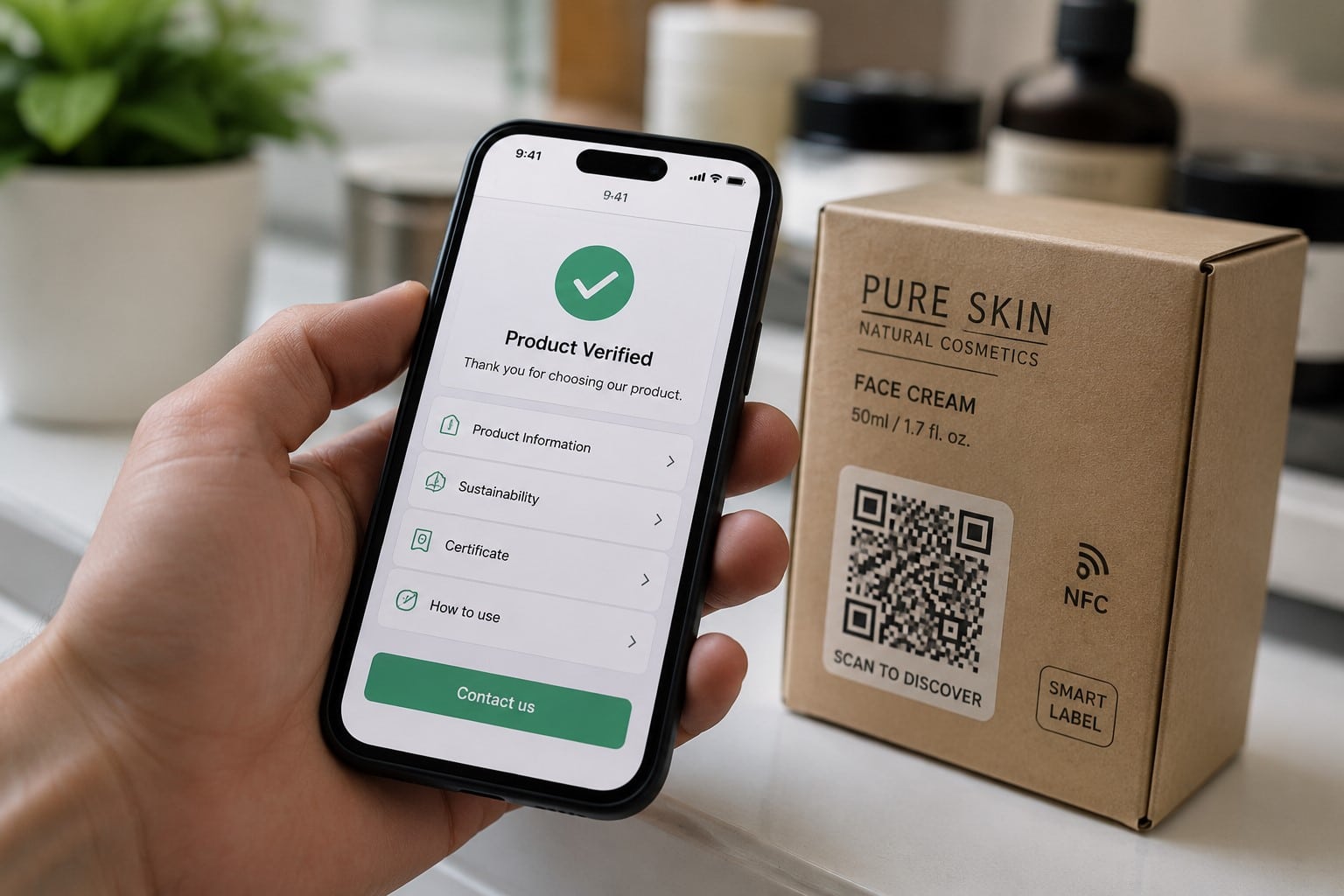
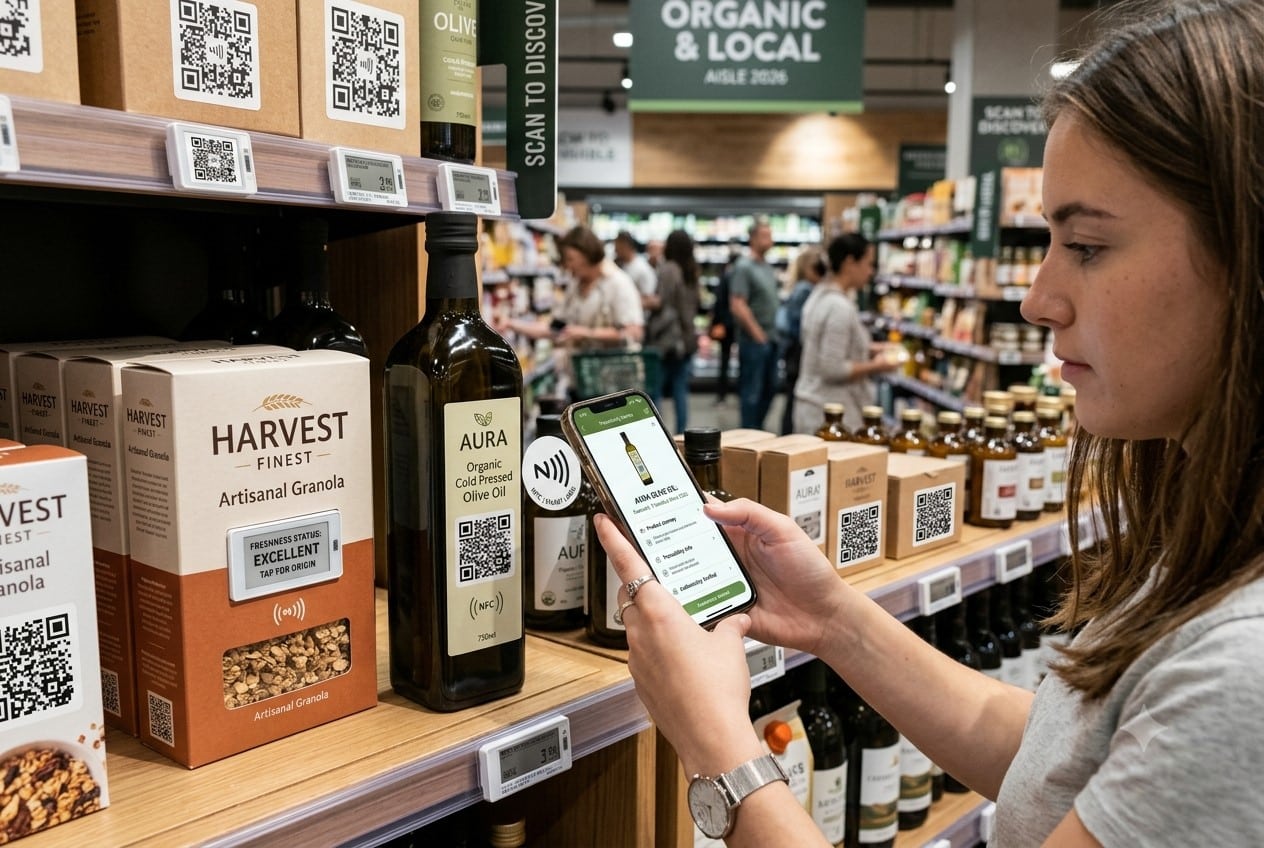
QR code packaging gives the chance to create a connection between the physical product and digital data. By scanning a code with their smartphone, customers can access information such as product details, ingredients, instructions, authenticity pages, sustainability details, promotions, and brand stories.
In contrast to traditional printed packaging, QR codes have the capability to give access to information that is modifiable without having to redesign the actual physical packaging. They prove to be quite helpful for businesses that manage multiple markets, languages, product variants, and regulations.
GS1 recognizes this development in the context of next-generation barcodes, saying, “Next-generation barcodes can help industry meet regulatory needs, like those around sustainability.” GS1 says that QR Codes driven by GS1 and GS1 DataMatrix would provide transparency without cluttering the packaging with more information.
NFC Packaging Provides a Smooth Experience
While QR codes need to be scanned using a camera, NFC packaging allows consumers to engage with the product by holding their NFC-enabled smartphones near the tag. This provides a smooth experience and is quite beneficial for premium products, cosmetics, fashion items, electronics, pharmaceuticals, and luxury packaging.
NFC labels can help achieve the objectives of product authentication, protection against counterfeits, loyalty program implementation, digital product information, traceability, and brand engagement. Moreover, NFC labels can assist brands in creating a controlled digital experience, since each NFC label can be linked to a unique digital identity.
The business potential is significant. According to Fortune Business Insights, the global market value of NFC-enabled packaging amounts to USD 5.68 billion in 2025 and is expected to grow to USD 16.27 billion by 2034.
Smart Labels Linking Packaging to Information
Smart labels go beyond regular printed labels by implementing advanced technologies, such as QR codes, NFC, RFID, sensors, and digital identifiers. The task of smart labels is to deliver information, improve traceability, track products, or engage customers directly.
This trend is already apparent for businesses. As stated in the 2026 Global Connected Packaging Survey by Appetite Creative, 81.2% of surveyed companies used connected packaging, while last year this share was 72.6%. What is even more important, 47.1% of those who used connected packaging used both QR codes and NFC, while 31.8% used QR codes only, and 21.1% used NFC only.
This implies that QR codes and NFC-enabled packaging do not have to be perceived as alternative technologies. Rather, companies can leverage both to offer their consumers different ways and approaches of interacting with the brand.
Digital Product Passports and Packaging Regulations
One more key reason for smart packaging usage lies in changing regulations. The introduction of the Digital Product Passport (DPP) program by the European Union is significantly driving the demand for digital product information and transparency.
As per GS1, the Digital Product Passport represents a digital document holding detailed information on the product in question and acting as its digital identity across the entire value chain. According to the EU Ecodesign for Sustainable Products Regulation, the Digital Product Passport needs to be linked via a data carrier to a persistent unique product identifier, where the information should be based on open and interoperable standards.
Connected packaging, QR codes, NFC, product traceability, and digital product passports become crucial elements for future-oriented producers.
What Does It Mean for Packaging Manufacturers?
On the other hand, for packaging suppliers, this change requires creating a balance between aesthetics and the digital capabilities of the packaging. A smart packaging solution should include not only adding a QR code or NFC tag but also taking care of printing quality, scanning quality, label quality, tag location, durability, user experience, information security, and digital platform integration.
The objective here is to make the packaging more useful without destroying its attractiveness and physical characteristics. For instance, in 2026, brands demand from packaging suppliers the provision of solutions to meet their requirements for custom packaging, intelligent labels, product authentication, brand protection, sustainability, and digital engagement.
Conclusion
QR Codes, NFC & Smart Labels: The New Standard for Packaging in 2026 is not only a packaging trend but the next level of packaging evolution. As part of a digital revolution in the industry, smart packaging technologies will become increasingly important in the future.
Yiruixing Packaging delivers customized packaging solutions that are aimed at helping brands address the growing packaging and labeling needs. In addition to being a custom packaging manufacturer, Yiruixing Packaging can provide innovative solutions that may be used for developing functional and appealing packaging for products. For those who consider using smart labels, custom packaging, QR code technology, and advanced packaging solutions, Yiruixing Packaging can be a useful option.
Case Study: QR & NFC-Enabled Packaging for a US Client
To meet the growing demand for connected packaging, Yiruixing Packaging has already produced a small-batch packaging solution integrated with QR code and NFC functionality for one of our US clients. The solution combines physical packaging with digital interaction, helping the client explore new ways to engage customers and deliver product information. This project reflects our ability to respond to emerging packaging trends while developing practical, customized solutions. Yiruixing Packaging keeps pace with market trends and develops steadily, continuously improving its packaging capabilities to meet the evolving needs of global brands.
FAQs
Is it possible to use QR codes and NFC tags simultaneously on one package?
Yes. This possibility allows brands to offer consumers various options for scanning a QR code or tapping an NFC tag.
How can smart labels be used to protect a brand from counterfeiting?
Smart labels allow brands to assign a unique digital identity to a product, which can then be verified via a QR code/NFC tag.
Is it possible to use QR codes for Digital Product Passports?
Yes. QR codes are considered to be data carriers that allow associating physical goods with digital data, and therefore, QR codes can be used in Digital Product Passports.
Is it possible to add smart technology to premium packaging?
Yes. QR codes and NFC labels can be integrated into labels, boxes, or inserts of packages without spoiling the appearance of the package.
What is better for packaging: QR codes, NFC, or RFID?
It depends on the application. QR codes work well for consumer engagement, NFC for tap-based interactions and authentication, and RFID for supply chain and inventory tracking.