
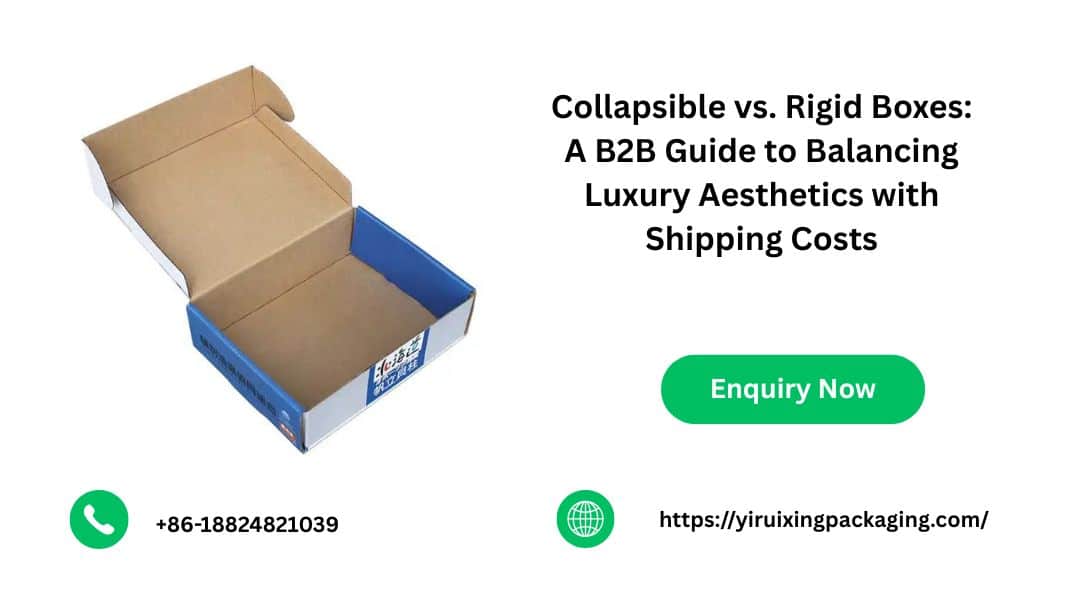
Collapsible vs. Rigid Boxes: A B2B Guide to Balancing Luxury Aesthetics with Shipping Costs – In the fiercely competitive arena of high-end product packaging, enterprises are increasingly posing a question: Collapsible vs. Rigid Boxes – which option provides us with the perfect mix of visually attractive luxury and cost-efficient shipping? For B2B brands in cosmetics, fashion, electronics, and luxury goods, this tactical choice has a significant effect on margins, logistics performance, brand experience, and sustainability goals.
By 2026, packaging decisions will go beyond merely serving as a protective element – they will be a major profit driver and a way for the brand to set itself apart.
The Packaging Landscape: What B2B Brands Should Know
The worldwide luxury rigid boxes market is growing at a high pace – it is forecast to hit between $6.7 billion and almost $9 billion by 2034, driven by premium brand strategies and the growth of e-commerce. Rigid boxes have always been a symbol of quality and luxury through features like thick boards, magnetic closures, and very personal finishes such as foil stamping or soft-touch lamination. The downside is that this luxurious touch entails higher logistics costs because pre-assembled rigid boxes take up more volume during storage and shipping, and as such, they directly influence freight rates that are based on dimensional weight.
On the other hand, collapsible rigid boxes – which have been specially designed to be shipped flat – are coming in as a hybrid answer that not only meets the requirements for luxury packaging but also offers great savings on logistics. They are basically solid boxes that can be put together at the location, integrating the strength of a traditional box with fold-flat convenience.
Why Collapsible Boxes Matter for B2B Logistics
Shipping & Storage Cost Reduction
Logistics expenses are often the number one concern for B2B brands, especially if they ship internationally. Compared to assembled rigid packaging, collapsible rigid boxes can cut shipping volume by 50-60% or even more, thus directly lowering the freight expenses and storage footprint.
In one industry research case study example, a brand that switched to collapsible packaging cut its freight costs by up to 45% simply due to the increased number of units per container and reduced pallet space.
Warehouse Optimization
With the ever-increasing cost of limited warehouse space, collapsible designs enable brands to keep more packaging inventory in less space – according to operational data, it can be up to 80% more efficient. As a result, brands can have more room for finished goods or additional SKUs, which eventually leads to lower rent and handling labor costs.
Sustainability Impact
Apart from saving money, sustainability has become one of the real value metrics when making B2B purchasing decisions. By having a smaller volume, collapsible boxes cause less CO emissions during the transport phase of the product lifecycle, which is often an integral element of corporate sustainability reporting and carbon reduction targets.
“The packaging is more than a protective cover – it is a way to influence perception, enhance performance, and increase profitability.”
Such a statement explains why making wise packaging choices – e.g., opting for collapsible rigid structures instead of traditional rigid ones – is becoming more and more part of brand strategies as well as product protection.
Luxury Aesthetics: Can Collapsible Boxes Compete with Rigid Ones?
Absolutely. Folding cartons are made in such a way that they can keep the appearance and the touch at the highest level. They can be finished with all sorts of luxury details like hot foil stamping, embossing, UV coating, and magnetic closures, which are all indications of a premium packaging that the luxury consumers still demand.
Traditional rigid cases have the advantage of immediate 3-dimensional stability and a classic high-end look and feel. If the moment of opening the box is the key to your brand experience – for example, in the case of extremely luxurious jewelry or collectible electronics – then, despite the higher logistics expenses, you may still prefer to go for pre-assembled rigid boxes.
Collapsible vs. Rigid: B2B Buyers’ Decision Matters
| Factor | Collapsible Rigid Boxes | Traditional Rigid Boxes |
| Shipping cost | Lower (flat shipping) | Higher volume cost |
| Storage Efficiency | High (up to 80%) | Low (bulkier) |
| Brand Aesthetics | Premium (custom finishes) | Premium (classic feel) |
| Assembly Needs | Requires on-site setup | Ready out of box |
| Cost Per Unit (Material & Production | Competitive depending on volume | Generally higher for luxury options |
Top Industry Insights
- Sustainability has become a must-have element. Currently, 42% of rigid box suppliers have a line of recyclable or biodegradable materials.
- NFC and smart packaging features are being added to luxury rigid box designs to increase customer engagement by a remarkable 37%.
- Custom folding cartons are leading the way over traditional rigid boxes due to their hybrid value in cost and presentation.
Summary
Each packaging type has its merits, and there will always be a trade-off between the aspects of luxury presentation and operational efficiency. Collapsible boxes help reduce shipping and storage expenses, yet rigid boxes are the ones that exude a premium feel right from the first glance. B2B brands should coordinate their packaging choices with their supply chain and brand positioning in order to extract the maximum benefits and obtain sustainable profits.
FAQs
What are the differences between collapsible and rigid boxes?
Collapsible boxes are shipped flat and can be assembled later, which reduces the costs of freight and storage, while traditional rigid boxes are already pre-assembled, which means structural integrity is available immediately.
Do collapsible boxes look less premium than rigid boxes?
Definitely not. Nowadays, collapsible rigid boxes are able to provide high-end finishes such as foil stamping and magnetic closures that are very similar to rigid packaging.
Which option is more cost-efficient for international shipping?
Due to less dimensional weight and better container efficiency, collapsible boxes are generally more cost-efficient for international shipping.
Are collapsible boxes less durable?
They aren’t – once they are assembled, collapsible rigid boxes offer the same level of structural strength and product protection as the conventional rigid boxes.
How should I decide between collapsible and rigid boxes for my brand?
Think about your priorities: like logistics and savings on cost, suitable for collapsible options, quick premium impact, suitable for traditional rigid boxes – but both of them can support luxury branding. Manage your supply chain costs with marketing goals.