
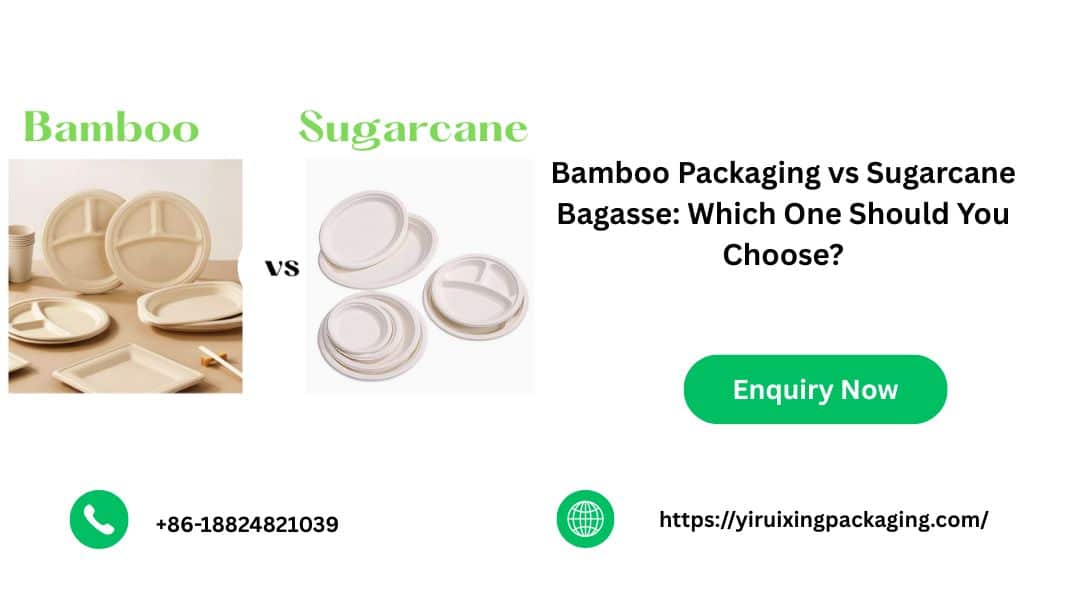
You may have recently seen media coverage of both bamboo and sugarcane bagasse as biodegradable options to plastic packaging, if you are researching sustainable options to avoid using plastic for packaging. Both of these product materials fulfill the requirements of being an eco-friendly, renewable product, as well as a superior alternative for companies wishing to offer eco-friendly, custom packaging solutions for their products while also decreasing their environmental impact. How do you determine which of these two products would work best for your product?
In this article, we will provide you with a side-by-side comparison that will assist you in making an informed choice when deciding which product is the best choice for your needs.
The Popularity of Bamboo and Bagasse Among Consumers Today
Consumers today want companies to demonstrate their commitment to sustainability. As a result, businesses must not only have functional packaging but must also produce environmentally friendly packaging. Bamboo and bagasse fulfill both of these requirements, as they:
- Come from renewable resources (plants)
- They are biodegradable and compostable
- Reduce reliance on plastic
- Works well with today’s modern branding and natural aesthetic style
While both products have environmentally conscious components, they are different in their intended applications, based on the products being sold, and how the manufacturer’s brand wishes to position itself in the market.
Bamboo Packaging: Flexibility, Style, and High-Quality
Bamboo is the fastest-growing member of the grass family; it can grow rapidly and needs no chemical fertilizers to thrive. Therefore, bamboo is a renewable resource with no negative impact on the environment.
Bamboo Packaging and Its Benefits
- Exceptional strength
Bamboo fibers are naturally strong, making them ideal for use in higher-end and heavier products such as cosmetics, electronics, and luxury gift packaging.
- Premium appearance
Bamboo has a smooth and premium finish and will take your brand’s packaging to the next level.
- Eco-friendly and sustainable
Bamboo grows rapidly and creates a far smaller carbon footprint than other traditional packaging materials.
- Perfect for custom designs
Bamboo can be formed and shaped to exact dimensions and is great for custom trays, inserts, and custom packaging designs.
Considerations
- More expensive than bagasse.
- Heavier than bagasse.
- Best for long-term or reusable packaging.
Sugarcane Bagasse Packaging: Cost-effective, Compostable, and Versatile
Sugarcane bagasse is a fibrous by-product created when juice is extracted from sugarcane. By turning sugarcane bagasse into packaging products, we are able to create a secondary use for this by-product, thus preventing it from going into landfills and helping reduce the amount of waste produced.
Benefits of Sugarcane Bagasse Packaging
- Cost-effective
Bagasse generally costs less than bamboo, so it is ideal for businesses with a large volume of packaging needs.
- Breaks down quickly
Sugarcane bagasse will begin decomposing in an industrial compost environment within 60-90 days.
- Lightweight, functional, and practical
Sugarcane bagasse is ideally suited for cups, food containers, trays, and other single-use packaging products.
- Naturally heat resistant
Bagasse holds up well with hot foods and liquids, making it s favorite for the food-service industry.
Things to consider.
- Not as rigid as bamboo.
- Less premium-looking.
- Best for everyday or disposable packaging
Bamboo vs. Bagasse: Side-by-Side Comparison
Here’s a quick breakdown of how they stack up:
| Feature | Bamboo Packaging | Sugarcane Bagasse |
| Strength | High | Moderate |
| Cost | Higher | Lower |
| Aesthetic | Premium, wood-like | Simple, matte |
| Customization | Highly detailed | Basic shapes |
| Sustainability | Highly renewable | Repurposed waste |
| Best For | Luxury goods & durable packaging | Food service & bulk packaging |
“Choose bamboo packaging when presentation and durability matter. Choose bagasse when affordability and compostability are the priorities.”
Choosing the Right Material for Your Brand
Still unsure which one fits your needs? Try evaluating your brand’s priorities:
Choose Bamboo If:
- You sell luxury or fragile products
- You want reusable or long-lasting packaging
- You’re focused on premium brand presentation
- You need precise custom packaging designs
Bamboo communicates quality, craftsmanship, and sustainability all at once.
Choose Bagasse If:
- Your products are disposable or single-use
- You’re in food or beverage service
- You need cost-effective, eco-friendly packaging
- Lightweight matters more than durability
Bagasse communicates practicality, minimalism, and environmental responsibility.
A Simple Guide for Choosing Between Bamboo & Sugarcane Bagasse
If you’re trying to choose between bamboo & sugarcane bagasse, here are some helpful tips that you can use to help make a decision.
- Identify the Needs of Your Product
Bamboo, being much stronger than sugarcane bagasse, is ideal for heavy or fragile products. Conversely, sugarcane bagasse is ideal for food products or lightweight items.
- Consider the Cost
Sugarcane bagasse is typically less expensive than bamboo and is better-suited for manufacturers producing large orders. Bamboo is more expensive, as it is considered to be a premium product; therefore, the price reflects that.
- Consider Your Brand Image
If you want to position yourself as a high-end brand, bamboo is a great choice. On the other hand, if you are looking for an eco-friendly and basic image, then sugarcane bagasse is an excellent choice.
- Consider End-of-Life Disposal
Both bamboo and sugarcane bagasse can be composted, but sugarcane bagasse will decompose more quickly because of its porous structure.
- Review Your Custom Packaging Needs
Although both bamboo and sugarcane bagasse provide options for custom packaging, bamboo provides better molding/finishing/ shape options when compared to sugarcane bagasse. Sugarcane bagasse is versatile; however, it is a better material for basic trays and containers.
Summary
When considering bamboo vs sugarcane bagasse, the best choice depends on product needs, brand image, and budget. Bamboo is considered to be a luxurious and durable option for premium custom packaging, whereas sugarcane bagasse is useful and economical, making it an exceptional material for disposable and everyday packaging.
If you’re looking for high-quality, eco-friendly packaging options such as bamboo and bagasse, Yiruixing Packaging
can help you create the perfect custom products to suit your needs.
FAQs
Is Bamboo more environmentally friendly than Bagasse?
Both types of packaging materials offer environmentally friendly benefits; bamboo is fast-growing and renewable, while bagasse is made from agricultural waste products, along both types reduce plastic waste considerably.
Can Bamboo & Bagasse products be composted?
Both bamboo and bagasse packaging can be composted. Generally speaking, bagasse will break down quicker than bamboo.
Which Material Works Better For Food Packaging?
Bagasse is the material of choice for most food packaging because it is heat-resistant, less expensive, and can be produced in large quantities. Bamboo packaging can be used to package food products, but as a general rule, it is good for reusable containers, not single-use disposable food containers.
Which is Better For Custom Packaging Projects?
Bamboo is better suited for custom packaging requiring precise details and a premium look and feel. Bagasse is better suited for less complex designs.
Which is More Affordable?
Generally speaking, bagasse (made from sugarcane) is much less expensive than bamboo and is therefore recommended for large volume supplies. Bamboo is considered to be a premium type of packaging.